
Professional / relationship-minded
Relationship-minded dating service
A context to consider if serious relationships, professional compatibility, and long-term intent are important to you.
Meet Relationship-Minded SinglesDestinations
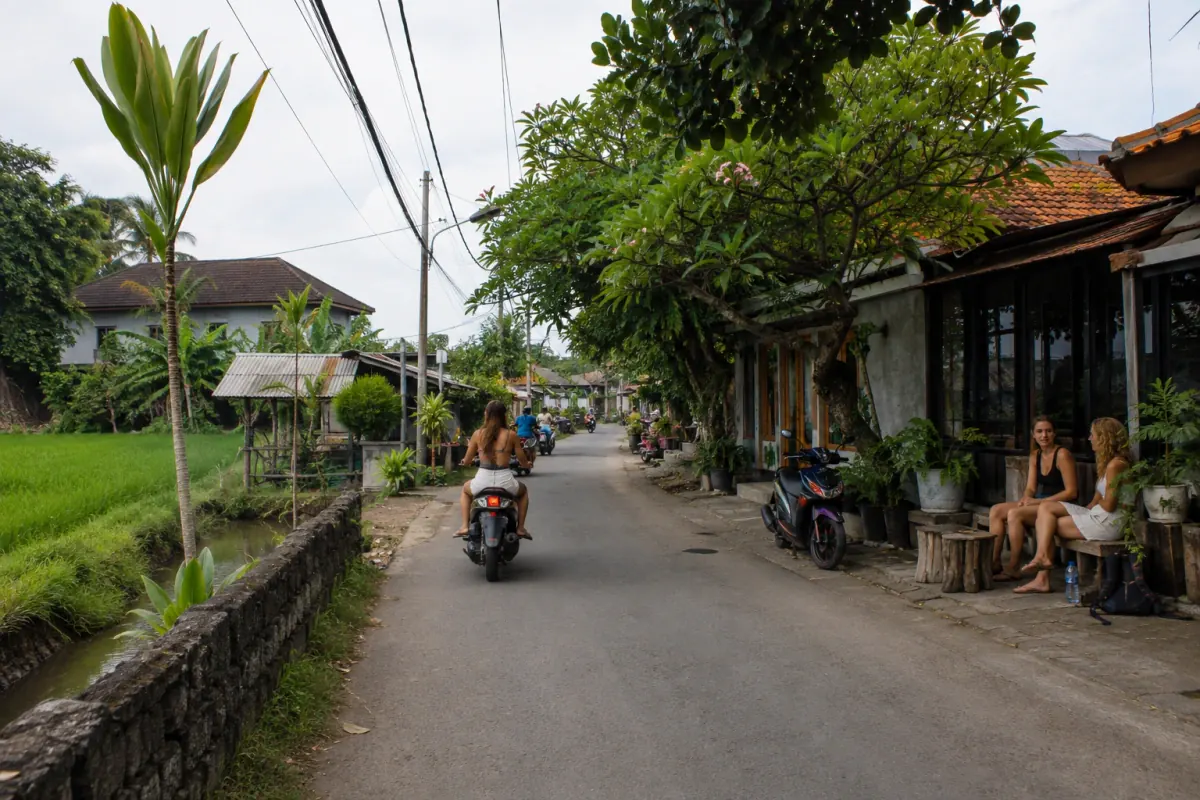
Bangkok is Southeast Asia's most infrastructure-rich long-stay base for remote workers. For anyone evaluating digital nomad Bangkok, the city offers a rare combination: a mature rail transit network (BTS Skytrain and MRT subway), fast fixed and mobile internet, a large and tiered coworking ecosystem, and the convenience of a major international capital with direct flights, world-class healthcare, and every amenity within reach of a train station. The trade-off is equally real. Bangkok is hotter, more expensive, and less walkable than Chiang Mai. Year-round humidity and seasonal PM2.5 haze shape daily life, and neighborhood choice matters more here than in almost any other Southeast Asian nomad destination.
Sponsored
Connect with other digital nomads for friendship, conversation, or companionship.
Bangkok is large enough that dating works better when you choose a repeatable part of the city instead of treating the whole metropolis as one social scene. Sukhumvit around Phrom Phong and Thong Lo has a dense mix of cafés, coworking spaces, gyms, restaurants, and BTS connections, which makes it easier to turn a first meeting into a second one. Ari offers a calmer neighborhood rhythm with cafés and small restaurants, while Sathorn can suit people whose work and weekday routine are closer to the central business district. The practical goal is not to find the most fashionable area; it is to choose places you can return to without spending an hour in traffic.
Use settings that create context over time. A coworking community, a recurring language exchange, a fitness class, or a professional meetup can reveal how someone handles ordinary workdays, not only how they behave during a high-energy evening. Benjakitti Park and the riverside offer lower-pressure options for a walk, while cafés near Ari or Thong Lo can make a short conversation easier to extend. If you are considering a relationship-minded dating service, a relationship-focused dating service can be one option alongside local routines.
Before making plans, confirm current opening hours, event schedules, transport conditions, and any venue rules directly. A place that works for a daytime introduction may not suit a late return or a busy workday. Keep first meetings public, tell a friend where you are going, and let consistency build naturally.
Bangkok also rewards early clarity about distance and schedule. Someone living near the BTS may have a very different daily pattern from someone relying on cross-town rides, and a short-term visitor may not want the same continuity as a resident building a base. Ask how long each person expects to stay, where they usually spend the workweek, and what a realistic next meeting would look like. For a broader framework on compatibility, communication, and mobility, continue with the digital nomad dating guide.
| Factor | Assessment |
|---|---|
| Cost | Moderate to high compared with Chiang Mai; range driven primarily by neighborhood choice |
| Internet | Strong city-level connectivity context; building-level variation exists |
| Coworking | Large and diverse — corporate chains (WeWork, JustCo), boutique (The Hive), startup hubs; more expensive than Chiang Mai |
| Community | Large and active but geographically dispersed; events concentrated in Sukhumvit and Ari; no seasonal exodus |
| Getting around | BTS/MRT rail network is the defining advantage; separate fare systems require planning; walkability limited by heat and sidewalk quality |
| Long-stay suitability | Good year-round; no burning-season departure unlike Chiang Mai; heat and cost are the main constraints |
| Best for | Urban nomads, infrastructure-focused remote workers, social nomads, those needing international connectivity and business amenities |
| Main drawback | Year-round heat and humidity, higher cost than Chiang Mai, limited city-wide walkability |
These are qualitative judgments, not numerical scores, reflecting how Bangkok typically functions for someone working remotely for several weeks or longer.
Bangkok's appeal rests on infrastructure rather than small-city charm. The city's BTS Skytrain and MRT subway connect most nomad neighborhoods, making it possible to live without a scooter. City-level connectivity is strong, but actual service depends on the building, provider, and router.
The coworking market is large and clearly tiered, from global chains like WeWork and JustCo to boutique operators like The Hive. Platform rankings and review counts are not used as objective assessments here. The city's international airport, regional hub status, and dense amenities make it a practical base for both short visits and extended stays.
Cost in Bangkok is driven primarily by neighborhood and housing quality. On Nut, Ari, Sukhumvit, Silom, and Thong Lo offer different trade-offs in rent, commute, amenities, and noise; current listings should be checked for the exact building and contract.
Food, transport, connectivity, and coworking terms vary with daily choices and operator plans. Treat them as separate budget lines rather than relying on one city-wide estimate.
This guide does not publish a fixed current monthly budget for Bangkok because market prices and accommodation conditions require fresh verification before use.
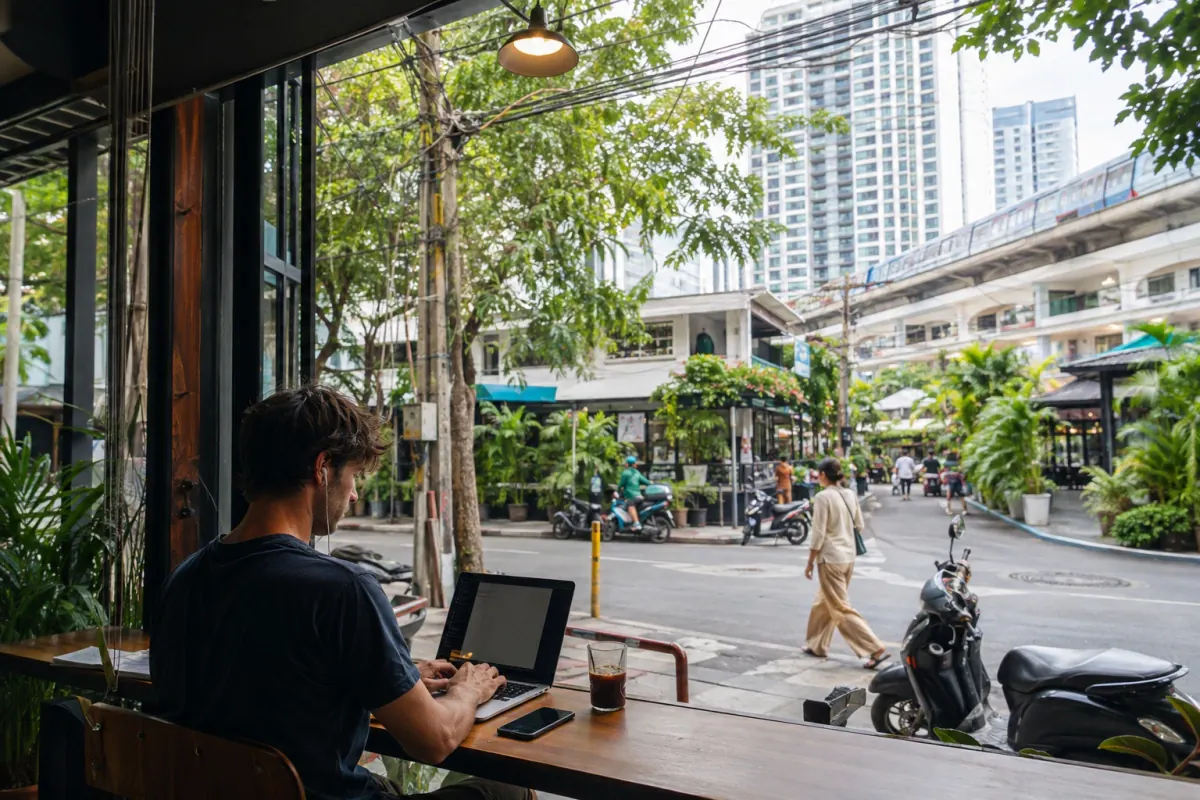
Choosing a neighborhood in Bangkok is the single most important decision for a long-stay remote worker. It determines your commute to coworking, your access to BTS or MRT, your rent, and your daily exposure to heat and noise.
The default nomad base and the city's densest concentration of coworking, international restaurants, and cafés. The BTS Sukhumvit Line connects the corridor, with stations around Nana, Asok, Phrom Phong, Thong Lo, and Ekkamai. WeWork, The Hive, and multiple JustCo locations are all within this stretch. Walkability is moderate around BTS stations, but Sukhumvit Road itself is noisy, has inconsistent sidewalks, and crossing it often requires overhead bridges. Best for first-time nomads and anyone prioritizing convenience and infrastructure. Drawback: high housing pressure, traffic congestion, and noise.
A leafy, creative neighborhood with a strong specialty coffee culture and a quieter, more local feel than central Sukhumvit. BTS Ari provides direct rail access, but there is no nearby MRT station. Coworking options are growing but less dense than Sukhumvit. Walkability is good within the Ari core — flatter streets with more consistent sidewalks. Best for those wanting a calmer, food-focused base with café culture. Drawback: fewer coworking options, less nightlife, BTS-only access.
Bangkok's central business district, with dual BTS and MRT access (Sala Daeng/Surasak BTS, Si Lom/Lumphini/Sam Yan MRT). Multiple JustCo locations and ClubCo serve professional remote workers, and the area has reliable infrastructure and business amenities. The atmosphere is corporate by day and social by night. Best for professionals needing business infrastructure, client meeting spaces, or MRT-dependent commutes. Drawback: can feel sterile on weekends, with nightlife adjacency in some areas.
A growing nomad neighborhood at the eastern end of the BTS Sukhumvit Line, offering a more residential feel and often a different housing trade-off from central Sukhumvit. The area has growing coworking and café options, though less dense than central Sukhumvit. Its rail connection makes it practical for budget-conscious nomads who accept more distance from central amenities and a smaller social/work ecosystem.
The upscale end of the Sukhumvit corridor, with a high density of quality restaurants, craft cocktail bars, specialty coffee, and boutique fitness. The Hive and WeWork anchor part of the coworking scene. BTS Phrom Phong and Thong Lo provide rail access, but there is no nearby MRT. Best for higher-budget nomads prioritizing food, lifestyle, and convenience. Drawback: significant housing pressure, traffic, and the risk of feeling isolated if the neighborhood does not match your routine.
Bangkok has strong city-level connectivity context, but that does not guarantee one apartment’s service. Actual experience depends on building infrastructure, provider availability, router quality, and backup options.
Bangkok's coworking ecosystem is large and clearly tiered. WeWork, JustCo, The Hive, True Digital Park, and smaller operators serve different neighborhoods and work styles. Locations, hours, connectivity, and membership terms change, so verify current details directly before relying on a space.
Café-working culture is pervasive, especially in Ari, Thong Lo, and the Sukhumvit soi areas. True Digital Park (Punnawithi BTS) serves the startup and tech community with coworking and events. Business details and pricing change, so verify current status before relying on specific spaces.
Bangkok's BTS Skytrain and MRT subway are the city's defining advantage for remote workers — and the most under-discussed factor in most nomad guides. The BTS Sukhumvit Line connects Nana, Asok, Phrom Phong, Thong Lo, Ekkamai, and Ari, while the Silom Line serves Sala Daeng and Saphan Taksin. The MRT Blue Line runs underground, with key stations at Sukhumvit (interchange with BTS Asok), Si Lom (interchange with BTS Sala Daeng), Lumphini, and Sam Yan.
A critical practical detail: BTS and MRT operate on separate fare systems and use different card arrangements. Check the BTS and MRT operators for current fares, hours, and payment options before planning a commute.
Walkability is limited city-wide, with heat, humidity, sidewalk quality, and road crossings shaping the experience. Grab is useful for first- and last-mile connections, while most nomads rely on rail plus ride-hailing rather than riding.
Bangkok's digital nomad community is large but geographically dispersed. Events and coworking-based social circles are concentrated in Sukhumvit, Ari, and other connected neighborhoods, but schedules and attendance change. Unlike Chiang Mai, Bangkok has no comparable seasonal exodus.
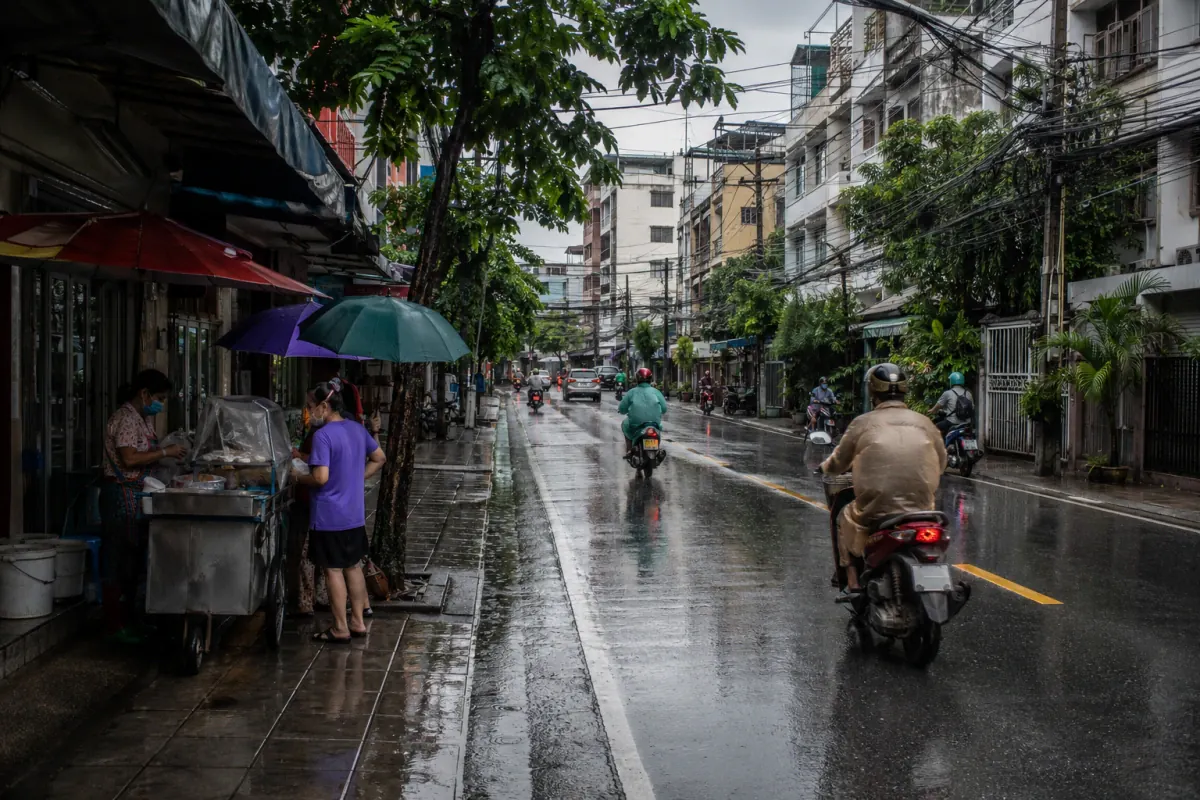
Daily life in Bangkok revolves around managing heat and maximizing air-conditioned spaces. A typical workday might start early at home or in a café, move to coworking through the midday heat, and end with evening socializing when temperatures drop slightly. Malls (Terminal 21, EmQuartier, Central Silom) function as air-conditioned community spaces, useful for work breaks, errands, and meals.
Food is a highlight at every price point, from street stalls and local markets to some of the best restaurants in Southeast Asia. Gyms, yoga studios, and boutique fitness are abundant, especially in Sukhumvit and Thong Lo. The city's pace is fast and international — you can find almost any amenity, product, or cuisine within a 20-minute BTS ride. The trade-off is that this convenience comes with noise, traffic, and a constant sense of urban energy that some people find energizing and others find draining.
Bangkok is generally safe for personal security, with normal urban awareness applying in busy areas and at night. Road safety is the most practical concern: Bangkok traffic is dense and fast, and scooter accidents are common. Pedestrian infrastructure is inconsistent outside BTS station areas.
The rainy season brings short, intense afternoon storms rather than all-day rain, though localized flooding can occur in low-lying areas. For air-quality concerns, see the dedicated section below. Thailand entry, visa, and remote-work rules can change and should be checked against the current official Thai DTV guidance. For a structured summary of the route, see our Thailand DTV guide. This page does not provide visa or tax advice.
Bangkok has a relatively cooler, drier season, a hotter season, and a wetter season, but exact conditions vary by year. The hot and humid climate affects commuting and outdoor routines, while rain can disrupt travel and contribute to localized flooding.
Year-round heat and humidity are the defining climate factor. Unlike Chiang Mai, Bangkok never gets cold, and air conditioning is not optional — it is a daily necessity that affects electricity bills, commute comfort, and outdoor activity patterns.
Air quality is a seasonal concern, though typically a different pattern from Chiang Mai’s burning season. Haze and PM2.5 conditions vary by year and should be checked through the Thai Pollution Control Department before making plans, especially for sensitive groups.
The most comfortable long-stay window is the cool, dry season (November–February), when temperatures are moderate and rain is minimal. This is also peak tourist season with higher accommodation prices, and it overlaps with the December–February PM2.5 haze period — so November often offers the most pleasant combination of comfortable weather and cleaner air.
The hot season (March–May) is intense but air quality improves after the haze clears. The rainy season (June–October) is underrated for remote work: storms are short, air quality is generally good, prices are lower, and indoor work is unaffected. Flooding can disrupt commutes in September and October.
A two-to-four-week trial stay is advisable for first-time visitors to test neighborhood choice, commute patterns, and heat tolerance before committing longer. One month is enough to establish a routine — a regular café, gym, coworking space, and social circle.
Multi-month stays are practical, particularly in the cooler or wetter seasons. Unlike Chiang Mai, Bangkok has no comparable seasonal event that drives a mass nomad exodus, so year-round long stays are viable. The main constraint is comfort: the combination of heat, humidity, and urban intensity wears on some people over time.
Building a social routine in Bangkok requires intentionality because the city is large and the community is dispersed. Coworking spaces provide the easiest entry point, with member communities and informal events. Recurring Meetup groups — coffee mornings, board game nights, language exchanges — offer low-pressure ways to meet people, though schedules and venues change.
Most social activity clusters in Sukhumvit and Ari, so living near a BTS station makes attending events practical. For a broader framework on building connections as a remote worker, see our guide to connections for digital nomads.
Chiang Mai offers a contrasting Southeast Asian remote-work base, with lower costs and a slower pace but more seasonal air-quality constraints. Canggu offers a beach-oriented alternative with a denser coworking and social routine. For a direct decision view, compare Chiang Mai vs Bangkok, Bangkok vs Mexico City, or Bangkok vs Barcelona.
Cost planning, remote work, and slow travel are recurring themes for long-stay digital nomads. See the Remote Work guide for broader work-model and routine guidance.
Bangkok's strongest advantages are its infrastructure: fast internet, a functional rail transit system, a large and tiered coworking market, and the convenience of a major international capital. For remote workers who prioritize connectivity, urban amenities, and year-round livability, it offers one of the most complete long-stay environments in Southeast Asia.
The main compromises are heat and humidity that never fully relent, a higher cost structure than Chiang Mai (driven heavily by neighborhood choice), limited walkability, and a community that is large but dispersed. These shape daily life and should be weighed honestly.
If you value infrastructure, international connectivity, and urban energy, and can manage the heat and cost, digital nomad Bangkok is a strong long-stay base. If you prioritize affordability, walkability, or a tight-knit small-city community, other destinations may serve you better. Compare Bangkok with the wider destination guide before deciding.
Core sources are listed with their verification dates. Time-sensitive information should be rechecked before acting on it.
Common questions
Bangkok suits remote workers who value major-city infrastructure, public transport, coworking options, business services, and a large social scene. Heat, humidity, traffic, higher costs, and neighborhood choice are important trade-offs.
Coworking spaces, language exchanges, professional events, fitness classes, cafés, and communities near connected neighborhoods such as Sukhumvit, Ari, and Sathorn can support recurring contact.
Some neighborhoods are practical on foot, especially near BTS or MRT stations, but Bangkok is not uniformly walkable. Heat, traffic, distance, and first- and last-mile travel should shape where you stay.
The daily combination of heat, humidity, traffic, housing cost, and urban intensity can become tiring. Choosing accommodation near work, transport, food, and regular activities reduces that friction.