
Professional / relationship-minded
Relationship-minded dating service
A context to consider if serious relationships, professional compatibility, and long-term intent are important to you.
Meet Relationship-Minded SinglesDestinations
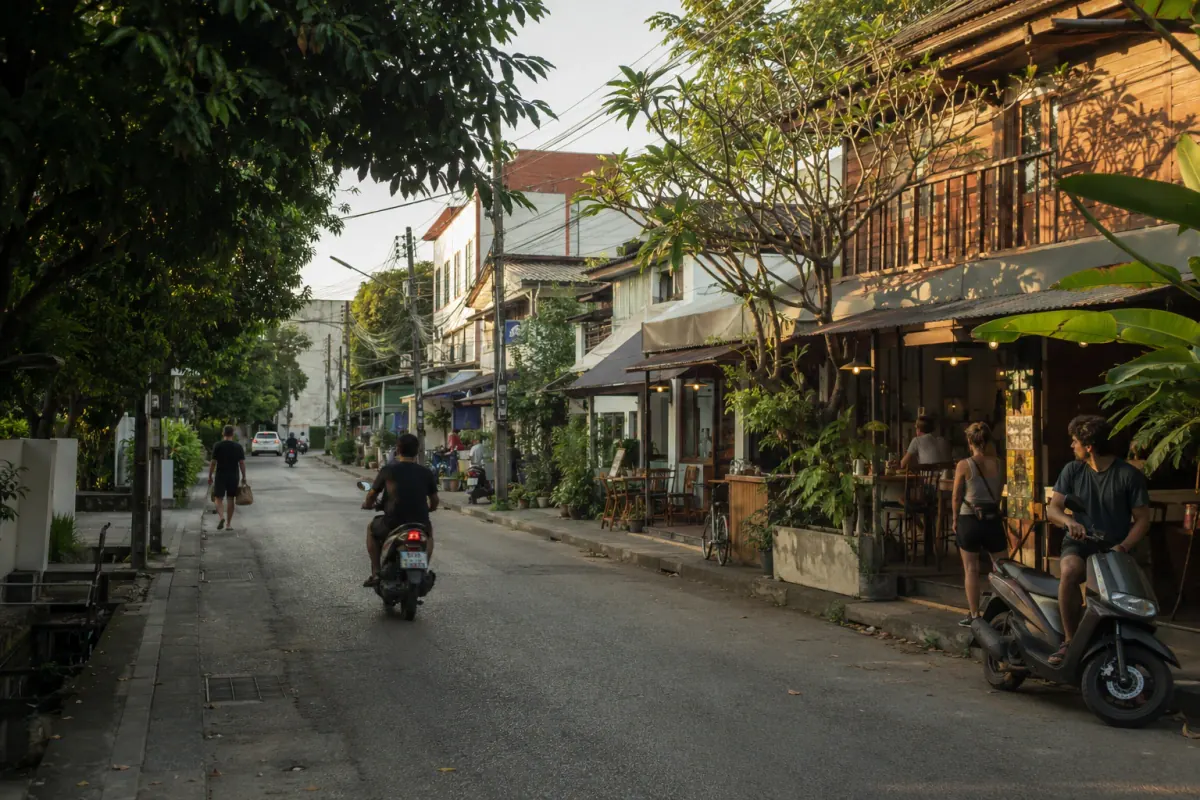
Chiang Mai has built one of the longest-running remote-worker ecosystems in Southeast Asia. For anyone evaluating digital nomad Chiang Mai as a long-stay destination, the city offers a practical combination of relatively low living costs, a dense café and coworking culture, and an established community that makes settling in for weeks or months straightforward rather than experimental. The city's slower pace compared with Bangkok is a significant part of its appeal. That said, much of the city is not highly walkable, and seasonal air quality during the burning season can be severe, varying significantly from year to year.
Sponsored
Connect with other digital nomads for friendship, conversation, or companionship.
Chiang Mai is easier to navigate socially when you build around a small daily radius. Nimman has a concentrated mix of cafés, coworking spaces, restaurants, and apartment living, so it can support repeated meetings without elaborate planning. Punspace and nearby work-friendly cafés are useful reference points for remote workers, while the Old City offers temples, walking streets, language classes, and a slower evening rhythm. Santitham can suit people who prefer a more local neighborhood feel, and Riverside provides a quieter alternative when you are willing to travel a little farther for dinner or an event. The best area is the one that matches your actual work and transport routine.
Choose activities where the same people may appear more than once. A coworking desk, a language exchange, a cooking or fitness class, and a regular café can create more useful context than a single nightlife introduction. The Sunday Walking Street is good for an informal daytime or early-evening outing, but it should be treated as a meeting place rather than proof of compatibility. If you are also considering a relationship-minded dating service, a relationship-focused dating service can complement, rather than replace, repeated local contact.
Before making plans, confirm current opening hours, event schedules, transport conditions, and any venue rules directly. A place that works for a daytime introduction may not suit a late return or a busy workday. Keep first meetings public, tell a friend where you are going, and let consistency build naturally.
Chiang Mai requires an honest conversation about timing. A person staying for two weeks, someone testing a one-month stay, and a resident planning around the burning season may all define dating differently. Discuss how long you expect to remain, whether air quality could change your plans, and how you would handle one person leaving the city. The digital nomad dating guide offers a broader framework for discussing continuity, communication, and long-term expectations.
| Factor | Assessment |
|---|---|
| Cost | Relatively accessible compared with many major international cities; ranges vary widely by lifestyle and neighborhood |
| Internet | Mobile connectivity solid; fixed broadband depends on building and area; Old City has slower fiber rollout |
| Coworking | Active ecosystem, concentrated in Nimman with additional options in Old City and Riverside |
| Community | Established, with recurring meetups and coworking-based social circles; activity peaks in cool season |
| Getting around | Limited walkability outside core areas; ride-hailing and scooters are the practical defaults |
| Long-stay suitability | Strong for multi-month stays in cool and rainy seasons; constrained during burning season |
| Best for | Budget-conscious remote workers, first-time nomads, café/coworking workers, slow travelers |
| Main drawback | Seasonal air pollution and limited city-wide walkability |
These are qualitative judgments, not numerical scores, reflecting how Chiang Mai typically functions for someone working remotely for several weeks or longer.
Chiang Mai's appeal rests on practical fundamentals. The city has hosted a significant remote-worker presence for well over a decade, so the infrastructure nomads rely on — coworking, English-friendly cafés, long-stay accommodation, and community — is mature rather than experimental.
Affordability is a major draw: compared with Western European cities, North American tech hubs, or Singapore and Tokyo, Chiang Mai offers substantially lower rent, food, and transport costs. The café and coworking culture, densest in Nimman, makes it easy to vary work environments and meet other remote workers. Nomads.com continues to show Chiang Mai as a prominent destination within its platform data, ranking it among the top destinations. This is platform behavioral data, not an official population count.
Costs are best understood as a range rather than a single number, because lifestyle choices — where you eat, transport mode, neighborhood — create wide variation.
Accommodation is the largest expense, and current rents vary materially by neighborhood, furnishing, contract length, and season. Use current listings rather than a fixed guide estimate when planning a stay.
Food, transport, connectivity, and workspace costs also depend on daily choices and operator terms. Treat them as separate budget lines and verify current prices directly before committing.
There is no single reliable current monthly budget that applies across Chiang Mai lifestyles. This guide keeps the comparison qualitative because older numeric ranges should not be reused without fresh market checks.
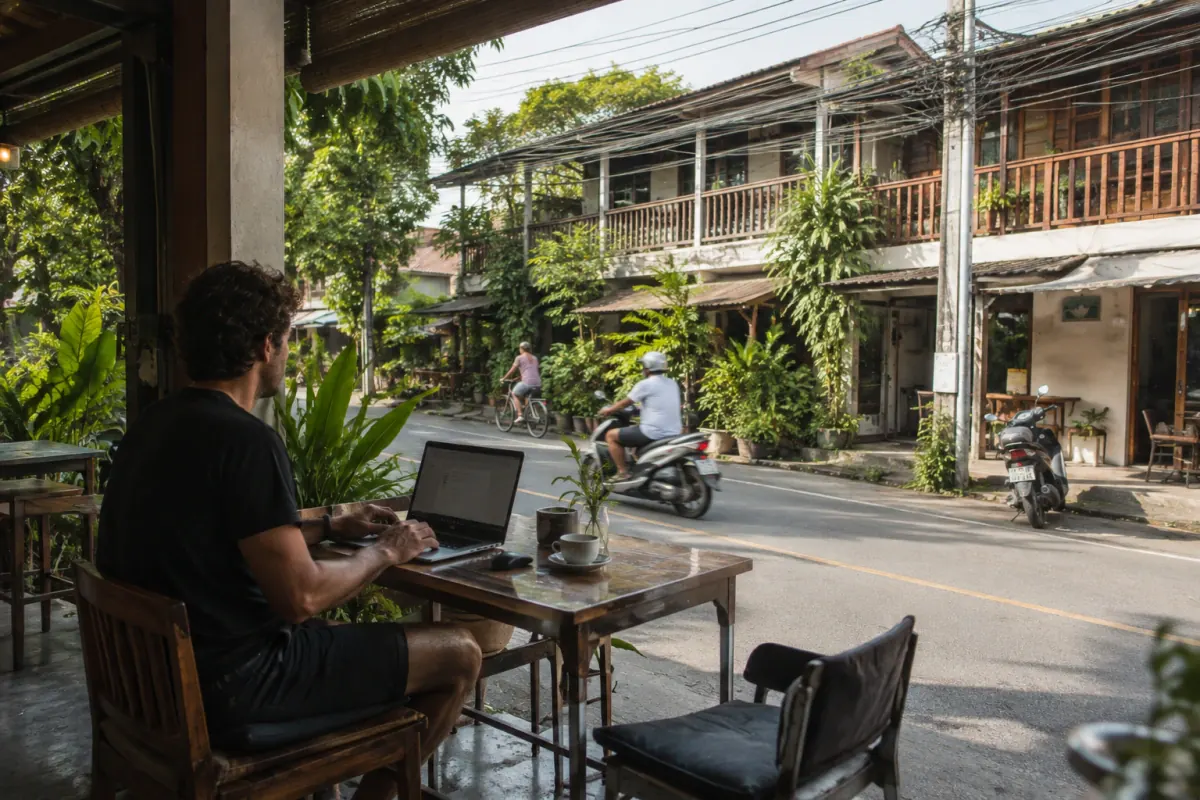
Choosing a neighborhood determines your daily commute to cafés and coworking, walkability, and social access.
The city's densest remote-work neighborhood, with the highest concentration of coworking spaces and work-friendly cafés (Punspace, CAMP at Maya Mall, Hub53, Yellow Coworking). The core is reasonably walkable, with international restaurants, gyms, and a mall nearby. A practical choice for first-time nomads and social workers who prefer coworking over working from home. Trade-off: highest rents in the city, peak-hour traffic, and rapid gentrification — the cost premium may not be worth it for longer budget stays.
A cultural, walkable environment with excellent street food and a historic atmosphere. Flat and compact within the walls, with several work-friendly cafés and Punspace near Tha Phae Gate. Dedicated coworking is less dense than Nimman, WiFi quality can be variable, and fiber rollout has been slower due to heritage restrictions. May work better for budget-conscious nomads and culture-focused workers who don't rely on daily coworking.
A quieter, residential long-stay area with lower rents than Nimman, local markets, and family restaurants. Primarily a work-from-home area — coworking is limited, and reaching Nimman requires a scooter or ride-hailing. Suits nomads who work from accommodation and are comfortable with motorized transport. Less ideal for first-timers wanting immediate walkable community. Rents have been rising; verify current pricing.
A sophisticated, artistic area with riverside restaurants and live music, less nomad-dense than Nimman. Alt_PingRiver operates a coliving and coworking space here. Walkability is moderate along the river. May work for those wanting a quieter, more local environment who don't mind a short ride from main nomad infrastructure. Current long-stay pricing should be checked separately, as reliable rent data is limited.
Mobile and fixed connectivity are useful strengths, but measured regional or national performance does not guarantee one apartment’s service. Actual experience depends on accommodation, building infrastructure, router quality, and backup options.
Chiang Mai's coworking ecosystem remains active, concentrated in Nimman with additional options near the Old City and along the river. Café-working culture is pervasive, especially in Nimman and near Chiang Mai University.
Punspace is an established operator with locations in the main work areas. CAMP at Maya Mall, Hub53, Yellow Coworking, and Alt_PingRiver add different café, coworking, and community options. Business details, hours, and membership terms can change, so verify directly before publication.
Chiang Mai is not highly walkable overall. Nimman core and the Old City are walkable for daily needs, but most other neighborhoods require transport. Sidewalk quality is inconsistent outside tourist zones.
Songthaews (red shared pickups) run fixed routes for a flat fare but schedules can be irregular, making them less reliable for time-sensitive work. Ride-hailing via Grab (and Bolt in some areas) is the most practical option, with strong coverage in central areas that thins in outlying suburbs; fares surge during festivals and rush hours.
Scooters are popular for flexibility and low monthly cost, making Santitham and Hang Dong practical and unlocking day trips. Anyone planning to ride should verify current Thai licensing and safety requirements from official sources. RTC buses operate on several routes but with limited coverage. Cycling works for short flat trips but requires caution in mixed traffic.
Chiang Mai has an established remote-worker community with activity varying by season. Active groups include professional, expat, and digital-nomad meetups, while coworking and coliving spaces also host social events. Schedules and attendance change, so check current listings rather than relying on a fixed event cadence.
Meetup member counts reflect registrations, not attendance. No reliable source provides a verified count of active digital nomads in Chiang Mai. Community access depends on showing up consistently to recurring events.
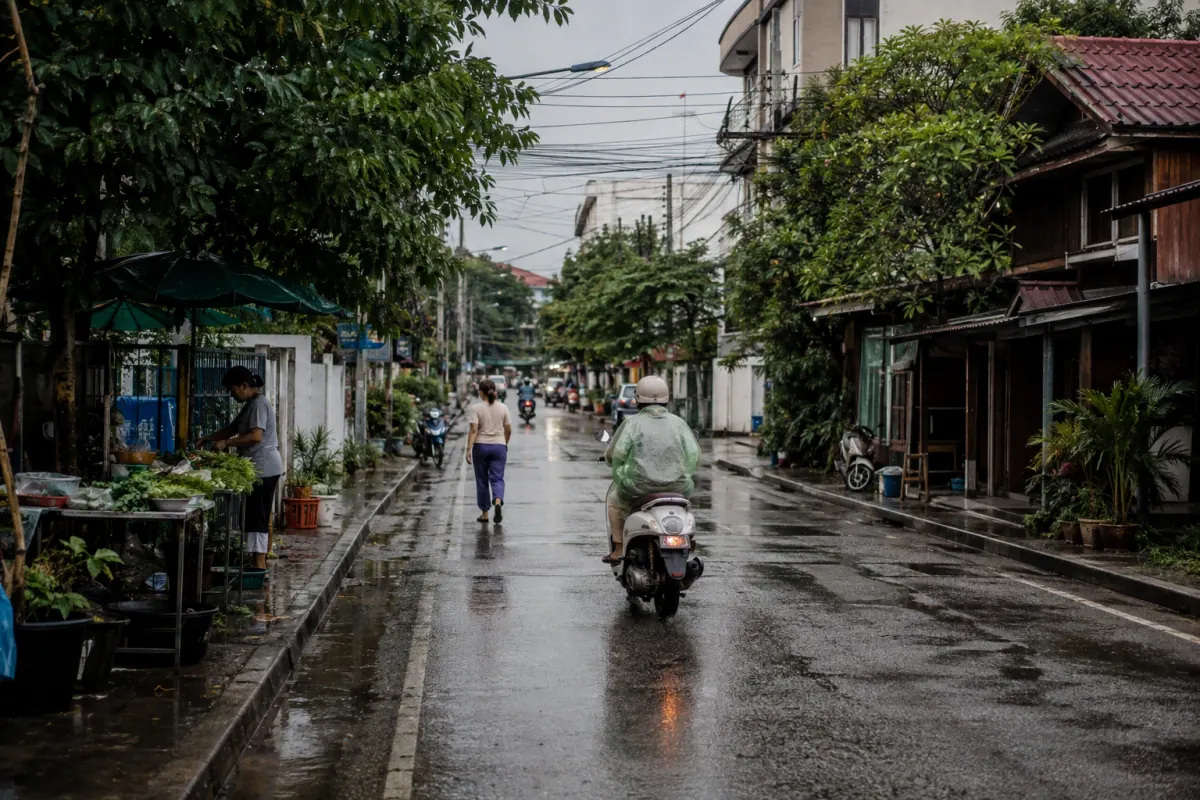
A typical workweek mixes home work, café or coworking sessions, and inexpensive daily errands. Fresh markets are widespread, and local food is available at all price points. Gyms and yoga studios are reasonably common, especially in Nimman and expat areas.
The city's pace is slower than Bangkok or major Southeast Asian capitals; traffic exists but is manageable. Many remote workers structure days around early-morning work, a late café breakfast or lunch, and afternoon or evening social activities. Nature is accessible — Doi Suthep and surrounding mountains are a short drive away — which matters for long-stay well-being rather than as a sightseeing draw.
Chiang Mai is generally low-key for personal safety, but normal urban awareness applies, especially in busy tourist areas and at night. Road safety is the most practical concern: scooter traffic is dense, and pedestrian infrastructure outside tourist zones is inconsistent.
The rainy season (Jun–Oct) brings short, heavy afternoon storms rather than all-day rain, though flooding can occur in low-lying areas. For air-quality and burning-season concerns, see the dedicated section below. Thailand entry, visa, and remote-work rules can change and should be checked against the current official Thai DTV guidance. For a structured summary of the route, see our Thailand DTV guide. The official DTV materials describe a workcation category for eligible remote workers; this page does not provide visa or tax advice.
Air quality is the single most important seasonal factor for anyone considering a long stay in Chiang Mai.
The city sits in a basin, and cool-season temperature inversions can trap pollution close to the ground. Agricultural burning, regional haze, and vehicle emissions can combine during the dry season, with severity varying significantly by year. Consult the Thai Pollution Control Department for current monitoring and health guidance.
Pre-monsoon and rainy-season conditions often improve air quality, but timing is variable. Do not treat one current reading or one season’s pattern as a permanent annual average.
Exact timing varies by year and should not be presented as a fixed date range. Health advisories have been issued by Thai officials during peaks, and sensitive groups (asthma, cardiovascular conditions) may be particularly affected. For remote workers, outdoor routines and exercise may need to move indoors for several weeks each year. A good air purifier is a worthwhile investment for stays through the burning season.
The best long-stay window is generally the cool, dry season (Nov–Feb): comfortable temperatures, clear skies, and enjoyable outdoor lifestyle, though also peak tourist season with higher prices. Smoke can begin building by late February, so early in this window is often most pleasant.
The hot season (Mar–May) overlaps with the burning season peak — see the air-quality section above for detail — making it the least comfortable period. Some nomads leave the city during these months.
The rainy season (Jun–Oct) is often underrated for remote work: short afternoon storms rather than all-day rain, clean air, lower prices, and less crowding. Indoor work is unaffected, and the quieter atmosphere suits focused work.
A short trial of two to four weeks works well for first-time visitors to test neighborhood, work setup, and daily rhythm before committing longer — especially advisable if you have air-quality concerns.
One month is a common minimum for establishing a routine (regular café, gym, social circle). Multi-month stays of three to six months are practical and common, particularly around the cool or rainy seasons. Slow travel — staying in one place for months rather than hopping weekly — has become a notable trend among U.S. digital nomads, with MBO Partners reporting that a significant share now prioritize longer stays. This is broader U.S. trend data, not Chiang Mai-specific.
If staying through the burning season, factor in limited outdoor routines for several weeks. Some nomads split their time, staying for cool and rainy months and traveling elsewhere during the worst air-quality period.
Building a social life is a matter of routines and showing up consistently. Coworking spaces are the easiest entry point, with member communities and informal events. Recurring groups — coffee meetups, language exchanges, hobby gatherings — provide low-pressure ways to meet people, though schedules and venues change.
The community is most active during the cool season (Nov–Feb). For a broader framework on building connections as a remote worker, see our guide to connections for digital nomads.
Bangkok and Canggu are comparable Southeast Asian remote-work bases with their own trade-offs around cost, infrastructure, and lifestyle. For a direct decision view, compare Chiang Mai vs Bangkok, Chiang Mai vs Canggu, or Chiang Mai vs Lisbon.
Slow travel, digital nomad cost of living, and working remotely while traveling are themes explored across our lifestyle section. Read the Remote Work guide for broader work-model and routine guidance.
Chiang Mai's strongest advantages are its mature remote-work ecosystem, relatively accessible costs, established community, and practical long-stay infrastructure. For many remote workers — especially first-time nomads and those on moderate budgets — it offers one of the lowest-friction ways to live and work abroad for an extended period.
The main compromises are seasonal air quality, which can be severe for several weeks each year, and limited city-wide walkability. These shape daily life and should be weighed honestly.
If you value affordability, community, and a relaxed pace, and can plan around the burning season, digital nomad Chiang Mai is worth serious consideration as a long-stay base. If clean air year-round or high walkability are non-negotiable, other destinations may serve you better. Compare this city with other digital nomad destinations before deciding.
Interested in the social side of a stay? Read our focused guide to dating in Chiang Mai as a digital nomad.
Core sources are listed with their verification dates. Time-sensitive information should be rechecked before acting on it.
Common questions
Chiang Mai can suit people seeking relatively accessible costs, established coworking and café routines, and a mature remote-worker community. Walkability is uneven and seasonal air quality needs serious planning.
Nimman cafés and coworking spaces, recurring language exchanges, professional meetups, fitness activities, and regular community events can make repeated contact easier than one-off sightseeing.
Burning-season air quality can vary significantly by year and may be severe. Check current conditions and official guidance before planning a longer stay, especially if air quality affects your health.
Nimman and parts of the Old City support some walkable daily routines, but the city is not highly walkable overall. Ride-hailing, shared transport, or a carefully chosen neighborhood may be practical.