
Professional / relationship-minded
Relationship-minded dating service
A context to consider if serious relationships, professional compatibility, and long-term intent are important to you.
Meet Relationship-Minded SinglesDestinations
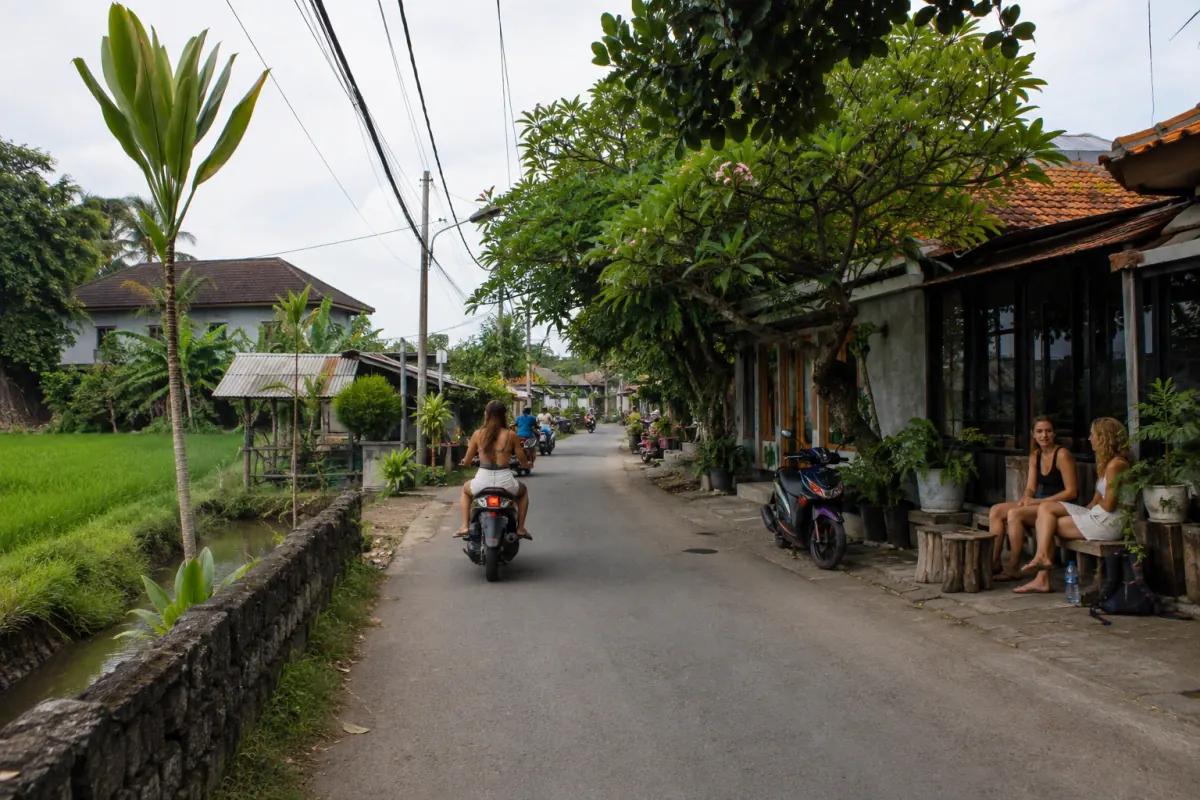
Canggu has become one of Bali’s most visible bases for remote workers because it compresses a lot of daily life into one coastal corridor: coworking spaces, cafés, gyms, wellness studios, international food, coliving, surf access, and an unusually easy-to-enter social scene. For anyone evaluating digital nomad Canggu as a long-stay destination, that density is the main attraction. You can arrive without a detailed network, find a work setup quickly, and build a routine around a small set of places. The trade-off is that Canggu is no longer a low-friction, low-cost surf village. Traffic, construction, noise, housing pressure, narrow roads, uneven sidewalks, drainage problems, and wet-season disruption shape ordinary life. It works best when accommodation, work, food, and exercise are close together.
Sponsored
Connect with other digital nomads for friendship, conversation, or companionship.
Canggu makes introductions easy, but durable dating still depends on choosing a routine that can survive traffic, rain, and frequent arrivals and departures. Batu Bolong has the highest concentration of cafés, restaurants, beach access, coworking, and social venues, which is convenient when you want to meet people without planning a long trip. Berawa offers another amenity-rich base with cafés, fitness studios, restaurants, and work-friendly spaces. Pererenan and Babakan are quieter and can work well for a longer stay, but they usually require more scooter or ride-hailing planning. Choose a neighborhood based on where you can realistically return each week.
Repeated contact can happen through a coworking membership, surf lessons, fitness classes, language exchanges, creative workshops, or a regular café near your accommodation. Batu Bolong beach walks can be a relaxed second-meeting option, while Berawa’s restaurant and café clusters make a short weekday meeting practical. These settings help you see how someone manages work, transport, and changing plans. If you want to add a relationship-minded dating service to those local routines, a relationship-focused dating service is one possible starting point.
Before making plans, confirm current opening hours, event schedules, transport conditions, and any venue rules directly. A place that works for a daytime introduction may not suit a late return or a busy workday. Keep first meetings public, tell a friend where you are going, and let consistency build naturally.
Canggu’s social energy can make a short connection feel more established than it is. Ask where each person lives, how long they expect to stay in Bali, whether they work normal weekdays, and how they handle the practical limits of scooter travel. A promising connection should leave room for ordinary plans rather than only beach sunsets, parties, or last-minute invitations. For guidance on matching relationship intent with a mobile schedule, read the digital nomad dating guide.
| Factor | Assessment |
|---|---|
| Cost | Moderate to high for Bali; housing varies sharply by subarea, contract length, and proximity to the beach |
| Internet | Good in established coworking spaces and many newer properties; accommodation reliability is building-specific |
| Coworking | Strong and visible, with dedicated spaces, coliving, and a dense café-working culture |
| Community | Large, international, and easy to enter, but transient and commercially oriented |
| Getting around | Scooter- and ride-hailing-dependent; central pockets are walkable, but the corridor is not reliably pedestrian-friendly |
| Long-stay suitability | Good for workers who accept traffic, heat, housing pressure, and a highly developed lifestyle district |
| Best for | Social remote workers, café/coworking users, beach-oriented residents, and people comfortable riding or paying for convenience |
| Main drawback | Infrastructure pressure: congestion, noise, development, limited walkability, and rising housing costs |
These are qualitative judgments, not numerical scores, reflecting how Canggu functions for someone working remotely for several weeks or longer.
Canggu’s appeal is practical as much as aspirational. Coworking, cafés, food, fitness, and services let a remote worker settle into a routine without depending on a large office district. Dedicated workspaces provide desks and community programming, while cafés offer variety.
The beach-oriented setting adds a different rhythm from a conventional city base. A workday can include a short walk or scooter ride to the coast, an early surf or exercise session, and an evening meal without leaving the local area. That lifestyle matters for people planning to stay for months rather than simply passing through. It can make remote work feel integrated into daily life instead of being the only activity.
Community is another strong pull. Coworking and coliving spaces, fitness classes, surf lessons, language exchanges, workshops, and professional meetups create repeated contact points for people arriving alone. The social ecosystem is international and easy to access, although it can also feel transient and shaped by the commercial lifestyle economy.
The important qualification is that Canggu’s convenience is highly local. Living near a coworking space and useful café may feel easy; crossing from Babakan to Berawa at a busy time may not.
Costs are best understood as a range rather than one “digital nomad average.” Housing is the dominant variable, and the search data mixes rooms, villas, hotels, serviced accommodation, and leases with different payment terms.
Current accommodation costs vary sharply by subarea, furnishing, contract length, season, and whether the listing is a room, villa, hotel, or serviced stay. Use current listings and inspect the exact property rather than reusing a fixed guide range.
Nomad-platform cost estimates are not stable enough to use as official averages or as a comparison baseline. Food, scooter rental, fuel, coworking, utilities, and accommodation should be checked as separate current budget lines.
Food can remain moderate if you use warungs and local cafés, but the international restaurant, specialty coffee, health-food, gym, wellness, and social layers raise the monthly budget quickly. Scooter rental, fuel, coworking, laundry, gym or yoga, electricity, air conditioning, cleaning, and delivery should be treated as separate lines rather than hidden inside a single total.
The rental term matters. Attractive monthly villa rates may require several months paid upfront, while a one- to three-month stay can be priced like furnished short-term accommodation. July and August, plus late December and early January, can bring stronger demand.
Overall, Canggu can cost less than many Western cities, but “cheap Bali” is misleading for central Canggu. A cheaper inland room may add transport time, while a central villa costs more because work and social life are nearby.
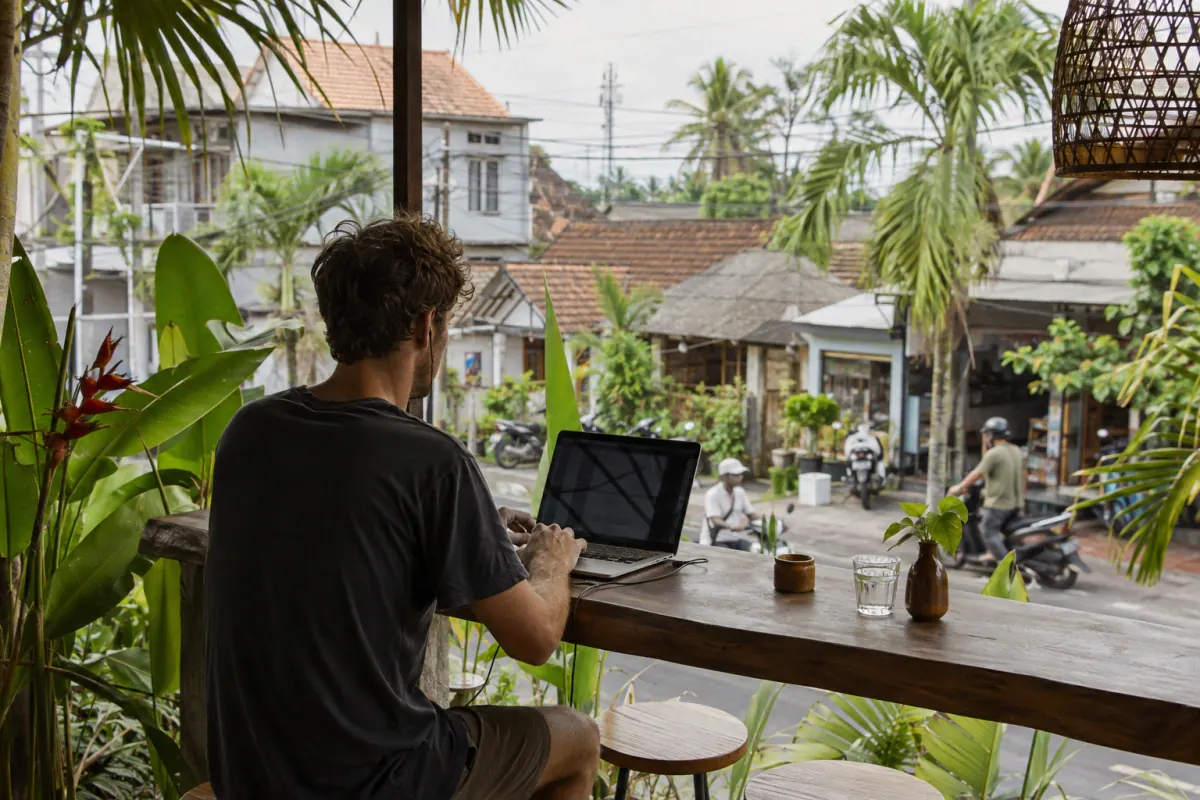
The Canggu search area is a practical corridor rather than a single uniform neighborhood. Subarea choice affects rent, noise, access to workspaces, beach proximity, traffic, and how often you need a scooter.
Batu Bolong is the central, high-energy choice: cafés, coworking, restaurants, beach access, services, and social venues are densely clustered. It suits first-time nomads and people who want to meet others quickly without planning every outing. A compact routine can be possible here, especially if work and accommodation are within the same few streets.
The trade-off is the highest concentration of crowding, traffic, noise, construction, and housing pressure. “Walkable” usually means walkable in pockets, not a comfortable pedestrian network across the whole area. Batu Bolong is a good fit for social access and convenience, but a poor fit for people who need quiet or predictable road travel.
Berawa is a developed, amenity-rich part of the corridor with strong café, fitness, coworking, restaurant, and social supply. Its position toward the Seminyak side gives residents access to both Canggu’s nomad ecosystem and a wider set of services. It is a practical choice for people who value polished amenities and networking opportunities.
Berawa also carries a convenience premium. Congestion and housing costs can be significant, and local traffic-management planning is an active issue. Choose Berawa when access and amenities matter more than a quiet or budget-oriented base.
Pererenan offers a calmer and more spacious feel while remaining close enough to Canggu’s coworking and social infrastructure. It is often the stronger choice for a longer stay, focused work, couples, or anyone who wants less central intensity without giving up the wider ecosystem.
The area is not a secret low-cost alternative. Development is accelerating, and the quieter atmosphere can come with fewer venues within walking distance. Residents should expect more scooter or ride-hailing use, particularly when attending events or working in central Canggu. Pererenan is best understood as a lower-density extension of the corridor, not an untouched rural escape.
Echo Beach is a beach- and surf-oriented pocket with restaurants, sunset routines, and an evening atmosphere. It may suit residents whose daily life is organized around the coast and who are comfortable choosing workspaces carefully rather than assuming the beach area itself will provide a quiet office environment.
The main compromises are noise, road access, nightlife adjacency, and uneven daily-service depth in some pockets. Echo Beach can be a strong lifestyle choice for a short or medium stay, but workers with frequent calls should test both the accommodation and nearby work options before committing.
Babakan is the inland, lower-density option. It can provide more space, a quieter setting, and a stronger sense of local surroundings than central Batu Bolong or Berawa. It suits work-from-home residents and longer-stay nomads who value room and quiet over immediate access to events.
The cost is mobility. Fewer cafés, coworking spaces, and services may be reachable on foot, so a scooter or driver becomes central to work and social life. Babakan works when the resident is comfortable building a home-based routine; it is less suitable for someone who wants to step outside and find a full nomad ecosystem immediately.
Choose Batu Bolong for maximum social access, Berawa for amenity density and cross-access, Pererenan for a calmer long-stay base, Echo Beach for a beach-first routine, and Babakan for space and quiet. In every case, inspect the exact lane, test the commute at a busy time, and ask about construction, drainage, power, and internet rather than relying on the subarea label alone.
Canggu’s work setup is strong in established coworking spaces and uneven at the property level. Regional mobile or venue measurements should not be treated as a guarantee for one villa, guesthouse, or café. Ask about actual video-call performance, router location, power backup, and mobile-data fallback.
For reliable remote work, separate four questions. Can the coworking space handle video calls? Does the accommodation have a stable router and fiber connection? Is mobile data available as a backup? What happens during storms or a local outage? Coworking-grade Wi-Fi should not be generalized to every villa, guesthouse, or café.
Telkomsel, Indosat, and XL are the relevant mobile providers to investigate, but coverage, packages, and tourist-SIM terms change. Ask an accommodation host about actual video-call performance, router location, power backup, and whether electricity or air conditioning is billed separately.
Canggu has one of the clearest coworking identities among Bali’s nomad-oriented areas. Current research identifies Bwork, Tropical Nomad, Outpost, and other dedicated or community-oriented venues, alongside a large café-working culture. Tropical Nomad describes itself as a coworking community for professionals, creatives, and artists.
Dedicated coworking is the safer choice for calls, meeting rooms, predictable desks, and structured community events. Cafés offer more flexibility and can be useful for a few focused hours, but noise, table turnover, power sockets, and Wi-Fi consistency vary. Coliving can reduce the friction of arriving alone, although privacy and quiet may be less predictable.
The best work area is not necessarily the one with the most venues. It is the one that lets you reach a suitable desk without spending a large part of the day in traffic.
Business status, hours, prices, membership plans, and locations change. Verify them directly before publication.
There is no rail network serving the Canggu corridor. Daily movement relies on scooters, ride-hailing, private drivers, and short trips along local roads. A scooter is convenient, but it also introduces road-safety exposure, licensing and insurance questions, rain risk, and the stress of mixed traffic.
The area can look compact on a map while feeling slow in practice. Heat, road edges, missing sidewalks, drainage, traffic, and construction all reduce practical walkability. Central Batu Bolong and Berawa can support a mostly local routine if accommodation, work, and daily needs are tightly clustered. Cross-corridor trips are a different proposition.
Badung authorities have discussed extending traffic-management measures to Berawa and Canggu, while local-government reporting documents drainage and sidewalk projects. These are signs of active infrastructure pressure, not just an inconvenience described by visitors.
Ride-hailing is useful for evenings, rain, or people who do not ride, but estimated arrival times can become unreliable during congestion. Pererenan and Babakan usually offer more space and quiet at the cost of greater scooter or driver dependence. If you plan to ride, verify current licensing, insurance, helmet, and safety requirements from Indonesian authorities before relying on a scooter as your main transport.
Canggu’s community is dense, international, and easy to enter. Coworking and coliving create repeated contact, while fitness, surf, wellness, language, creative, and professional activities provide routines beyond nightlife.
Platform listings describe Canggu as a digital-nomad hub, but platform activity, reviews, costs, and trip-length estimates are not a census or verified count of people living there. This guide treats the community as international and accessible without relying on platform scores or counts.
The community’s strength is also its limitation. People arrive and leave frequently, and social life can feel commercially organized around venues, memberships, and events. It is easy to meet people, but building durable relationships still requires showing up consistently. Living close to the right coworking or fitness routine often matters more than choosing the theoretically “best” part of Canggu.
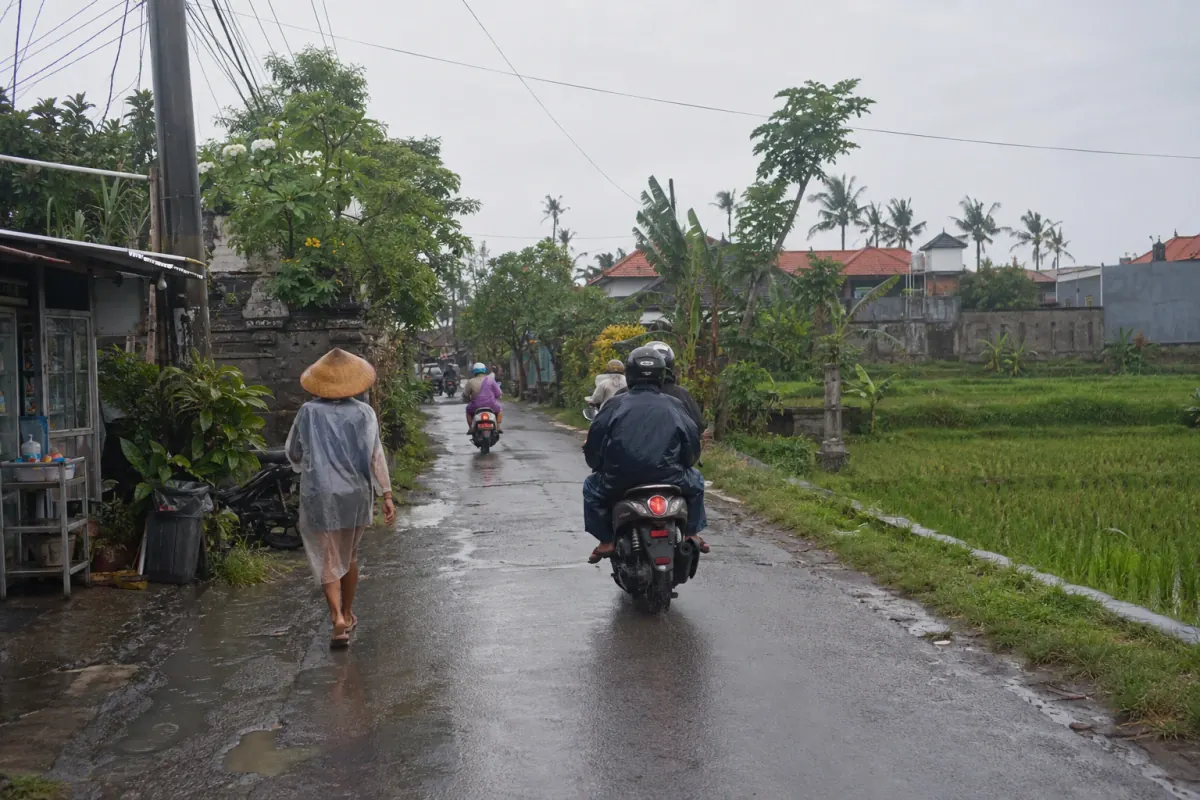
A normal week can combine home work, coworking, local food, cafés, exercise, errands, and time near the beach. Laundries, pharmacies, minimarts, salons, delivery services, fitness studios, and restaurants are widely available in the main corridor.
The beach-oriented lifestyle is real, but it is not a substitute for planning. A short ride can become a slow commute, rain can change the schedule, and attractive accommodation may have weak internet or difficult road access. International amenities can also make Canggu feel less locally immersive than some searchers expect from Bali.
Canggu is generally manageable for people using normal urban and road-safety awareness, but scooter accidents are the most practical risk. Narrow roads, mixed traffic, rain, poor lighting in some lanes, and unfamiliar driving patterns deserve more attention than generic destination-safety language. Anyone riding should verify licensing and insurance requirements and use a helmet consistently.
Property inspection matters. Ask about locks, water, mold, power, air conditioning, internet, construction nearby, and whether the lane floods. Badung official reporting has documented flooding in Canggu and identified narrowed waterways and building encroachment as mitigation concerns.
Tap water should not be assumed to be drinking water. Waste, drainage, cleaning, and maintenance standards vary by property and lane. These are practical checks for a long stay, not reasons to make universal claims about every accommodation or resident experience.
Indonesian visa and remote-work rules can change. If visa information is added later, use current official Indonesian immigration sources and keep it separate from the main Canggu living evaluation. This draft does not provide visa or tax advice.
Canggu is hot and humid year-round. Bali’s wetter and drier seasonal patterns are useful context, but exact timing varies by year and location. BMKG is the preferred source for current seasonal forecasts, rainfall outlooks, and severe-weather information.
Rain is often episodic rather than an all-day certainty, but heavy downpours can disrupt scooter trips, expose drainage weaknesses, and make narrow roads slippery. Wet-season humidity affects mold, laundry, sleep, and indoor comfort. Power, internet, and air-conditioning performance should be checked at the property level.
The drier period is more compatible with beach and scooter routines, but stronger accommodation demand can increase prices. The rainy season can suit focused indoor work if the accommodation is comfortable and the resident is prepared for disrupted commutes. Do not describe one current weather or air-quality reading as a year-round condition.
A two- to four-week trial is useful for testing a subarea, work setup, traffic tolerance, and daily rhythm before a longer rental. Central Canggu can feel noisier or slower in person than it appears online.
One month is enough to establish a routine around a coworking space, café, gym, and social group. Stays of three to six months are practical for people who can secure suitable accommodation and accept scooter dependence, heat, development, and the cost of convenience. Longer stays are more comfortable when housing is inspected in person and the resident has a plan for wet-season routines.
Canggu is not equally suitable for every season or subarea. A central base may maximize social access but increase noise and traffic fatigue. Pererenan or Babakan may work better for a multi-month stay if the resident is comfortable trading immediate access for space and quiet.
The easiest way to build a social life is to choose one or two recurring routines and attend them consistently. Coworking spaces are useful because they combine work and repeated contact. Fitness classes, surf lessons, language exchanges, workshops, and professional groups offer lower-pressure ways to meet people than nightlife alone.
Subarea affects access. Batu Bolong and Berawa provide the most immediate social density. Pererenan can be calmer and more selective, while Babakan requires more intention because social venues are less concentrated. A broader framework for building connections as a remote worker is available in our guide to connections for digital nomads.
The goal is a routine that survives arrivals and departures. Canggu makes introductions easy; durable connection still depends on showing up consistently beyond the most visible venues.
For a different Southeast Asian long-stay profile, Chiang Mai offers a slower inland city environment with a mature coworking ecosystem and a major seasonal air-quality trade-off. Bangkok offers denser urban infrastructure, rail transit, and a larger capital-city service base, with higher heat and big-city intensity. For a direct decision view, compare Chiang Mai vs Canggu, Canggu vs Lisbon, or Canggu vs Barcelona. For broader ideas on daily nomad routines and remote work, see the site's guides and nomad resources.
Canggu’s strongest advantages are its concentrated remote-work ecosystem, beach-oriented lifestyle, international community, and wide range of daily services. It is one of the easier places to enter socially and professionally if you want coworking, cafés, fitness, and outdoor routines close together.
Its main compromises are equally central to the experience: traffic, limited walkability, scooter dependence, development pressure, noise, housing-cost variation, and property-level uncertainty around internet and maintenance. These are not minor footnotes. They determine whether a stay feels energizing or exhausting.
If you want a lively, connected, beach-oriented base and can manage the cost and transport reality, digital nomad Canggu is worth considering for a trial or medium-term stay. If you need quiet, low traffic, low housing costs, or a strongly local environment, another area may serve you better. Explore other digital nomad destinations for comparison.
Core sources are listed with their verification dates. Time-sensitive information should be rechecked before acting on it.
Common questions
Canggu suits remote workers who want a strong café, coworking, fitness, surf, and international social scene. Traffic, construction, housing pressure, heat, and limited pedestrian infrastructure are significant trade-offs.
Coworking spaces, coliving communities, language exchanges, surf lessons, fitness classes, creative workshops, and regular cafés can create repeated contact across a busy social environment.
Many residents rely on scooters or ride-hailing because the wider corridor is not consistently walkable. Your decision should account for traffic confidence, road conditions, accommodation location, and daily travel needs.
Infrastructure pressure is the central challenge: congestion, development, noise, drainage, uneven sidewalks, and rising housing costs can affect an otherwise convenient lifestyle district.