
Professional / relationship-minded
Relationship-minded dating service
A context to consider if serious relationships, professional compatibility, and long-term intent are important to you.
Meet Relationship-Minded SinglesDestinations
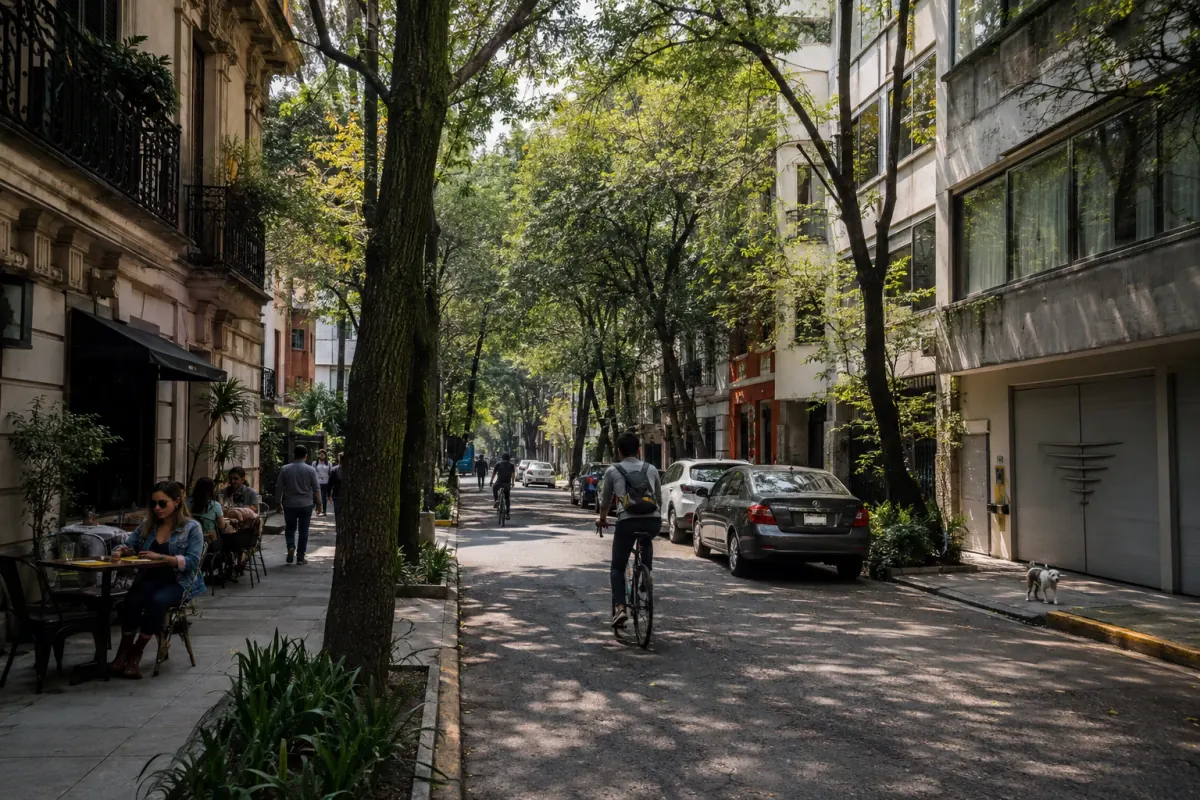
Mexico City is a strong option for remote workers who want a large, dense capital rather than a small, concentrated nomad base. Its biggest practical advantage is time-zone compatibility: many North American teams can work close to their normal schedule from Mexico City. The city also offers a deep café and coworking ecosystem, extensive public transport, international community, and enough neighborhoods to support very different routines. The trade-off is scale. Housing pressure, traffic, crowds, elevation, changing air quality, rainy weather, and building-level conditions all matter for a stay of several weeks or months.
Compare Mexico City with other digital nomad destinations before choosing a base. For work-model and routine guidance, read the Remote Work guide.
For current entry and stay information, consult the official Mexico visitor guide. For current transport and environmental conditions, check official Metro CDMX information and SEDEMA monitoring.
Sponsored
Connect with other digital nomads for friendship, conversation, or companionship.
Mexico City rewards people who date within a practical neighborhood radius. Roma Norte and Condesa offer dense cafés, restaurants, parks, coworking options, and walkable meeting points, while Juárez adds a central mix of food, culture, and nightlife. Coyoacán provides a slower weekend setting with plazas, museums, and neighborhood streets, although it is not equally convenient for every weekday routine. Polanco and San Miguel Chapultepec can suit people whose work or housing is farther west. Because the city is large and traffic can reshape a plan, choosing a repeatable area often matters more than finding one perfect venue.
Use activities that allow conversation to continue beyond a first introduction. Parque México and nearby cafés are useful for a low-pressure walk, while language exchanges, coworking communities, cooking classes, gallery events, and fitness studios can create recurring contact. A normal weekday meeting in Roma or Juárez may tell you more about compatibility than a special night out. If you want an additional route to meet people who share a serious relationship intention, a relationship-focused dating service is one option to consider beside local routines.
Before making plans, confirm current opening hours, event schedules, transport conditions, and any venue rules directly. A place that works for a daytime introduction may not suit a late return or a busy workday. Keep first meetings public, tell a friend where you are going, and let consistency build naturally.
Mexico City’s scale also makes logistics part of compatibility. Discuss where each person spends the workweek, whether they are comfortable crossing the city, how long they expect to remain, and how language affects communication. A connection can be meaningful without looking identical to a settled relationship, but the timeline should not stay vague by accident. For a broader approach to dating, communication, and mobility, continue to the digital nomad dating guide.
| Factor | Assessment |
|---|---|
| Cost | Moderate to high in popular central neighborhoods; housing is the main variable |
| Internet | Good city and national connectivity context, but the actual apartment or coworking venue must be tested |
| Coworking | Broad and mature, with serviced offices, community spaces, and café-working options |
| Community | Large and varied across professional, creative, language, and international networks |
| Getting around | Strong Metro and Metrobús coverage, offset by crowding, traffic, transfers, and city scale |
| Long-stay suitability | Good for people who choose a work-centered neighborhood and accept big-city logistics |
| Best for | North American remote workers, urban nomads, professionals, freelancers, and people who enjoy dense city life |
| Main drawback | Housing pressure and long-distance friction combined with altitude and variable air quality |
These are qualitative judgments, not numerical scores, reflecting how Mexico City works for someone living and working remotely for several weeks or longer.
The time zone is a meaningful advantage for many North American remote workers. Mexico City often fits a Central Time workday, which can make meetings with teams and clients in the United States or Canada easier than from Europe or Asia. The exact difference depends on the employer’s location and daylight-saving rules, so it is worth mapping your real calendar before choosing a base. Workers whose main commitments are in Europe or the Asia-Pacific region may experience the opposite scheduling trade-off.
Mexico City also has the depth that comes with being a major capital. There are professional services, universities, healthcare, gyms, supermarkets, delivery networks, cafés, coworking spaces, creative communities, and specialist businesses across a huge urban area. A remote worker can build a routine around a neighborhood instead of depending on a resort or a single coworking compound.
The city’s food and café culture is useful for daily life, not just leisure. A dedicated desk, a café, and a tested home setup can provide variety across a longer stay.
The honest qualification is that Mexico City rewards planning. The city can feel highly walkable inside Roma Norte, Condesa, Juárez, or parts of Polanco while still requiring a long trip to another district. The best routine is usually compact: choose housing near your recurring work, food, exercise, and social activities instead of assuming ride-hailing will solve every distance.
Mexico City does not have one reliable “digital nomad monthly cost.” Rent changes with the colonia, furnishing, building age, contract term, security, internet setup, and proximity to Metro or Metrobús. A furnished one-month apartment marketed internationally is a different product from an ordinary local lease, and a room share is different from a private studio.
Current market reporting indicates continued rent pressure in Mexico City, with Hipódromo Condesa and other popular central areas toward the expensive end of the market. A 2026 local rental guide places Coyoacán below Condesa and Polanco in several directional ranges, but those figures mix housing types and should be treated as market signals rather than guaranteed prices. The practical budget question is whether you are paying for centrality, convenience, condition, or flexibility. Roma Norte and Condesa can reduce transport needs but carry a premium. Polanco adds corporate access at a higher cost, while Coyoacán trades central convenience for space and pace.
Short-term furnished housing usually costs more than a standard long-term arrangement. A landlord or operator may ask for a deposit, documentation, proof of income, several months upfront, or a higher rate for flexible terms. Shared housing can reduce rent, but it changes privacy and work conditions. Confirm whether internet, utilities, cleaning, heating, water, and building fees are included.
Food can be managed at different price levels through markets, supermarkets, local cafés, and everyday Mexican routines. International restaurants, specialty coffee, gym memberships, coworking, private services, and frequent ride-hailing can change the budget quickly. Local transit may be relatively manageable, but a low fare does not remove the time cost of a long commute.
Housing pressure should be discussed with care. City rents and access to housing are documented concerns, and central neighborhoods have experienced broader gentrification, redevelopment, investment, tourism, and short-term-rental dynamics. International demand, including remote workers, may be one debated factor in selected areas, especially when combined with furnished short stays and stronger foreign purchasing power. That does not establish that digital nomads were the sole cause of the housing crisis. The responsible framing is a combination of documented pressure and contested causes, not a single-cause verdict. The balanced conclusion is that Mexico City can be workable at several budget levels, but the most visible remote-worker neighborhoods are not automatically low-cost. Compare rent, coworking, transport, utilities, and the value of living close to the workweek.
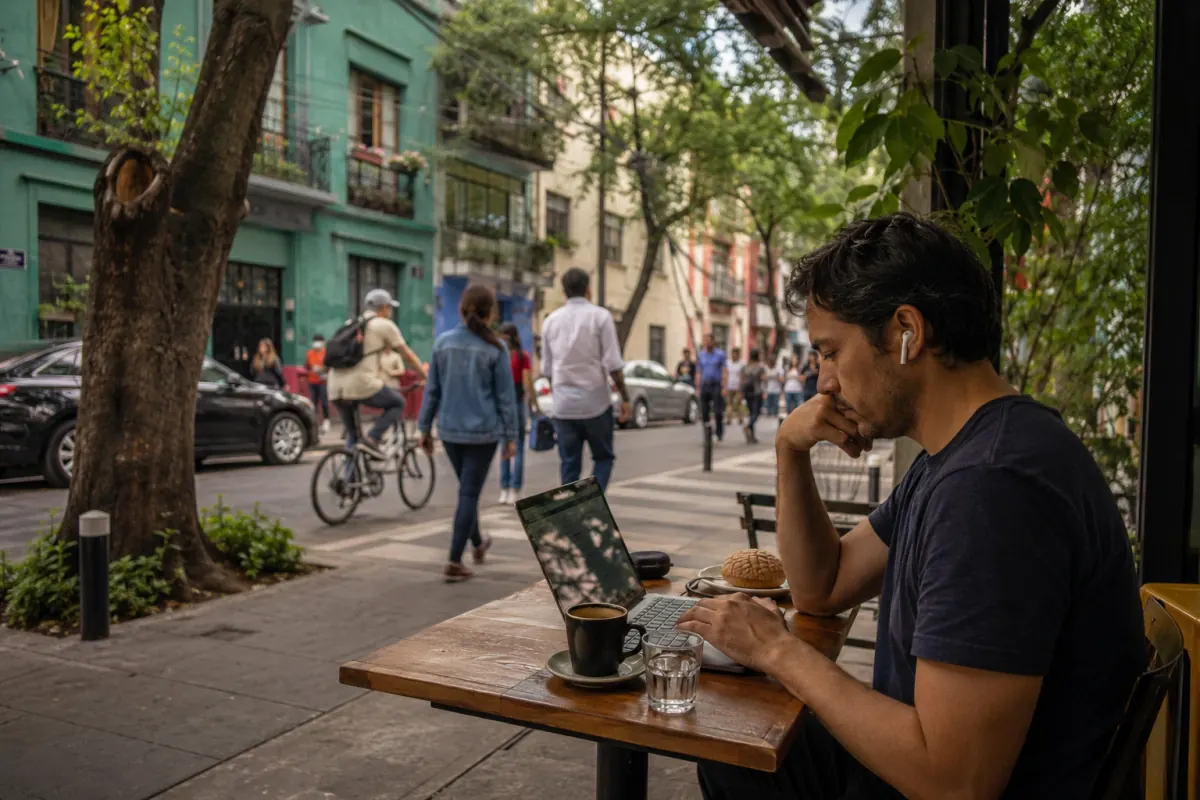
Mexico City neighborhoods differ in rent, noise, building condition, transit, social access, and distance from other parts of the city. These areas are useful search zones, not uniform markets. Inspect the exact block and the route to your daily destinations.
Roma Norte is central, café-rich, internationally visible, and convenient for people who want errands, food, coworking, and social routines within a relatively compact radius. It suits a first stay when learning the city matters and you would rather walk to several options than plan every outing around a vehicle.
The trade-off is price and pressure. Visitor activity, nightlife on some streets, construction, and strong competition for furnished housing can affect the experience. Roma Norte is a good fit when centrality and social access are worth paying for, but it should not be used as a proxy for average Mexico City rent.
Condesa offers tree-lined streets, parks, cafés, restaurants, and a dense international and remote-worker presence. It can make daily life feel unusually easy within a small walking radius, especially for people who want a polished neighborhood routine and frequent access to social events.
That convenience comes with one of the city’s strongest housing premiums. Condesa can be noisy or busy in selected blocks, and its international visibility has made it a sensitive example in discussions about housing pressure and neighborhood change. Choose it because the workweek fits, not because an online list calls it the default Mexico City base.
Juárez is central and mixed-use, with access to Reforma, Zona Rosa, Roma, Condesa, Metro, Metrobús, food, services, and workspaces. It can suit someone who wants broad transport connections and a more varied urban texture than Condesa.
Block-by-block conditions matter. Some streets have nightlife or traffic noise, and the neighborhood is changing quickly in places. Juárez works well for a worker who values central access over quiet residential character and is willing to inspect the building carefully.
Polanco is a high-service, corporate-oriented option with strong access to offices, premium services, public spaces, and business networks. It can make sense for higher-budget remote teams, professionals with meetings in the western business districts, and people who prioritize building quality and convenience.
The limitation is cost. Polanco can distort a visitor’s idea of ordinary Mexico City spending, especially when rent, food, coworking, and daily services are all selected at the premium end. It is a specialized choice rather than a universal recommendation.
Coyoacán offers a more residential and culturally rooted rhythm, with calmer pockets, local services, and a different southern-city feel. It may suit a longer stay for someone who wants more space or a slower routine and does not need to attend central events every day.
The trade-off is distance. Trips to Roma, Condesa, Juárez, or central coworking spaces can take time, and the practical transit choice depends on the exact address. Coyoacán is not uniformly cheap or quiet, but it can provide a useful alternative to the central international circuit.
Choose Roma Norte or Condesa when social access and café-working matter more than maximizing housing value. Choose Juárez when central connections and cross-city flexibility matter more than calm. Choose Polanco when work and service convenience justify a high budget. Choose Coyoacán when space and residential pace matter more than being near every central event.
Mexico City benefits from a mature fixed and mobile connectivity market, but national or city-level speed data cannot guarantee an individual apartment. Ookla’s Speedtest Global Index provides current country and, where available, city context; the final page should identify the geography and date precisely. The actual work test is more useful than a headline number. Ask for a recent speed test from the unit, test a video call at likely working hours, confirm who handles outages, and keep mobile tethering available. Building wiring, router placement, service activation, and power conditions can matter more than the national median. A coworking space may be the safer option for important calls, but it adds to monthly spending.
Mexico City has a broad coworking and café ecosystem. Official operator pages document commercial coworking availability across the city, while independent cafés and community venues offer more flexible routines. A paid desk can provide predictable Wi-Fi, meeting rooms, power, and social contact. Café-working provides variety but requires attention to laptop policy, noise, power, table turnover, and whether calls are appropriate.
The best setup may be hybrid: a tested apartment for normal work, a coworking day pass for important meetings, and a small group of cafés for a change of scene. The key is to choose places close enough to use consistently.
Mexico City’s Metro is a major long-stay advantage. It reaches many parts of the metropolitan area and allows transfers across lines, while the official system publishes network and fare information. Metrobús adds dedicated bus corridors. Official information describes seven lines, 164 kilometres of route, 280 stations, and service across 13 alcaldías. Its coverage can be especially useful along major avenues, though stations and routes do not make every neighborhood equally convenient. Transit is practical, but not frictionless. Crowding, heat, transfers, service interruptions, and belongings awareness are part of ordinary use. Walking is useful within many central colonias, especially when housing, work, and food are close together. Citywide, however, wide avenues, uneven sidewalks, traffic, distance, rain, and air-quality conditions can change the experience quickly.
Ride-hailing is useful for late travel, rain, heavy luggage, or routes poorly served by transit. It cannot remove traffic. A trip that looks short on a map may take much longer during peak periods. The most effective transport strategy is usually to reduce recurring journeys rather than to choose a distant home and expect a car to solve the distance.
Mexico City supports professional, creative, academic, language, fitness, and international communities. Coworking spaces, language exchanges, classes, hobby groups, workshops, and professional meetups can create repeated points of contact. Nomads.com is useful for destination-level activity and community signals, but it is not an official count of digital nomads. The city’s scale creates both abundance and friction. Events may be frequent but far from home, so a recurring nearby routine is more useful than a long list. Roma Norte, Condesa, Juárez, Coyoacán, and Polanco support different networks.
The international layer is useful for arriving alone, but it does not replace local integration. Learning some Spanish and returning to the same spaces can turn introductions into a more durable social life. For broader ideas about meeting people while working remotely, see our guide to building connections as a digital nomad.
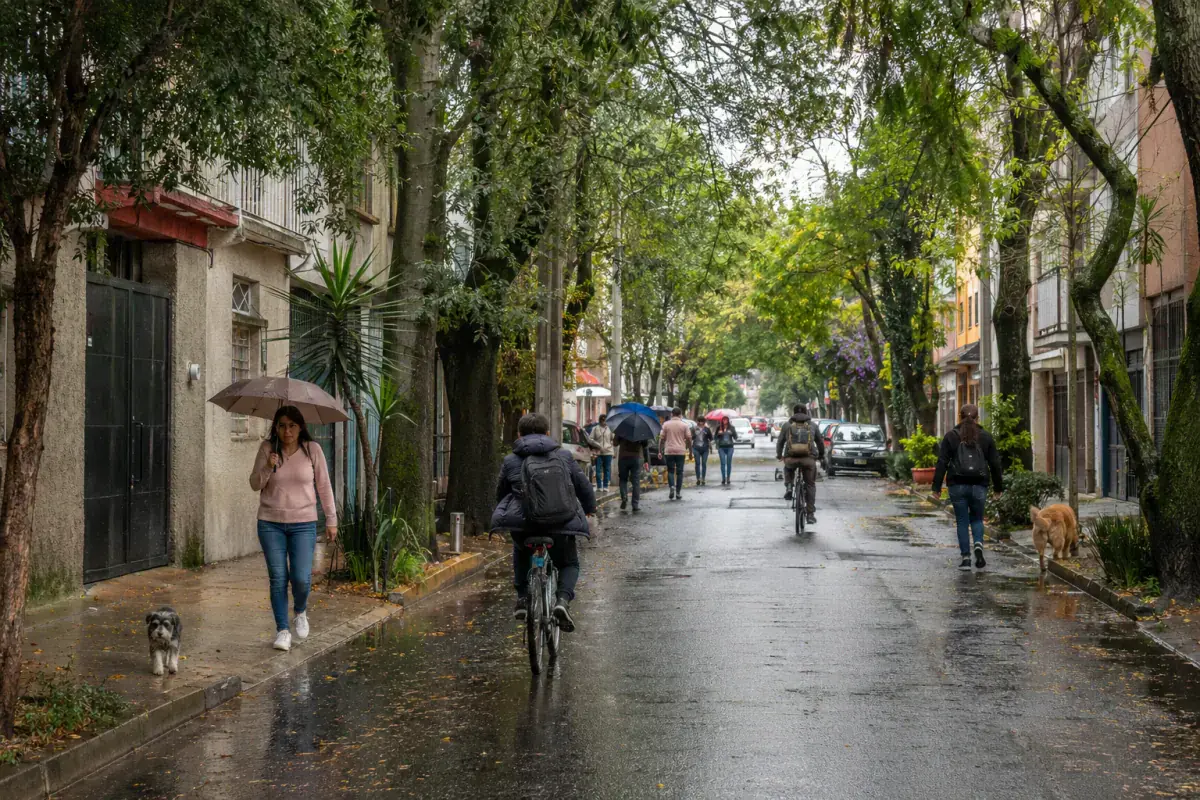
Everyday Mexico City is organized around neighborhoods. A workable week may include a home work block, a nearby café, a Metro or Metrobús trip, groceries, exercise, and one recurring social routine. The challenge is choosing a sustainable pattern rather than finding something to do.
The food and café ecosystem supports different budgets through markets, supermarkets, casual meals, coffee, and delivery. Parks, gyms, studios, and walking routes are available, but pollution, rain, altitude, and traffic can affect outdoor plans.
Apartment quality deserves attention. Check locks, water pressure, internet, noise, ventilation, heating, building access, construction nearby, and the route to groceries. Ask whether utilities are capped and what happens during an outage. Water and infrastructure questions should be treated as property-level inspection topics unless an official source supports a broader claim.
Mexico City requires normal big-city awareness rather than a single citywide safety label. Conditions vary by neighborhood, street, time of day, and transport choice. Keep phones and valuables discreet in crowded places, use established transport routines, inspect the immediate block in daylight and after dark, and confirm building access before moving in.
The page should avoid both fear and overconfidence. No neighborhood is universally safe or unsafe, and a busy central location can have different daytime and nighttime conditions. Digital security also matters: use trusted networks for sensitive work, enable account protections, and maintain a mobile backup when possible.
Altitude is another practical adjustment. INEGI identifies Mexico City at approximately 2,240 metres above sea level. New arrivals may notice changes in exertion, hydration, sleep, or energy during the first days. A slower start can help people understand their response; anyone with relevant health concerns should obtain professional advice rather than relying on a travel article. ## Weather and air quality
Mexico City has a temperate highland climate with a rainy summer pattern, cool mornings and evenings, and strong sun at elevation. Rain can affect walking, traffic, and building damp. A long-stay apartment should be checked for ventilation, heating, leaks, laundry drying, and work comfort rather than judged only by outdoor temperature.
Air quality is variable by pollutant, weather, season, traffic, and location. SEDEMA’s Dirección de Monitoreo Atmosférico publishes current air-quality data, forecasts, meteorological information, UV information, and open datasets. The final page should direct readers to current monitoring instead of promising clean or poor air for an entire season. People sensitive to air pollution may need a more deliberate routine, including checking conditions before outdoor exercise and choosing accommodation with suitable ventilation or filtration. This is practical planning, not medical advice. If air quality is a major personal constraint, Mexico City may be a difficult fit even when the neighborhood and work setup are otherwise attractive.
A two- to four-week trial is useful for testing altitude, air quality, internet, neighborhood noise, transit, and work-hour compatibility before signing a longer agreement. One month gives enough time to establish a practical routine, but it may still be dominated by furnished-housing costs.
Three to six months can make more sense for people who secure suitable housing and want to benefit from the city’s professional and social depth. Longer stays reward a neighborhood selected around recurring work and daily services rather than the most famous central address. They also make rent terms, deposits, utilities, building quality, and local routines more important than short-term convenience.
Mexico City can complement the existing destination set in a different way: Chiang Mai offers a smaller remote-work environment with seasonal air-quality concerns, Bangkok offers dense Southeast Asian capital infrastructure, Canggu offers a beach-oriented and scooter-dependent routine, Lisbon offers a smaller European capital experience with its own housing pressure, and Barcelona offers a denser Mediterranean city routine with similar housing trade-offs. These are comparisons of living patterns, not rankings.
Mexico City may suit you if:
Mexico City may be less suitable if:
Start with one or two repeated routines close to home: a coworking space, language class, professional group, gym, workshop, or neighborhood café. A nearby routine is more useful than a long event list, including in Coyoacán or another residential district.
Use the city’s social variety without assuming every introduction will last. Learn enough Spanish for ordinary interactions, return to the same places, and respect neighborhoods as homes rather than interchangeable lifestyle products.
Explore remote-work routines and cost planning alongside this Mexico City-specific destination evaluation.
Mexico City is a credible long-stay base for remote workers who want a major capital, broad urban services, strong North American time-zone compatibility, and a deep coworking, café, food, and community ecosystem. Its five practical neighborhood choices show why there is no single Mexico City experience: Roma Norte and Condesa prioritize central social convenience, Juárez prioritizes connections, Polanco prioritizes high-end service and corporate access, and Coyoacán prioritizes a more residential southern-city rhythm.
The compromises are equally important. Housing pressure makes popular central districts more expensive than older digital-nomad advice suggests. Traffic and city scale can consume time, while Metro and Metrobús require patience and awareness. Altitude, rainy weather, variable air quality, building conditions, and ordinary big-city safety habits all influence the workweek.
If you value North American schedule compatibility and dense urban life, and can choose housing with current conditions in mind, digital nomad Mexico City is worth serious consideration. If you need low rent, short distances, flat terrain, or predictable air quality, another base may be a better fit.
Choosing a city is only the first step. A longer stay also depends on friends and community, coworking and professional connections, roommates or coliving compatibility, local activities, and dating and relationships.
Mexico City’s scale makes it possible to build a rich social life, but meaningful dating and relationships still benefit from a repeatable neighborhood, work, or community routine. For practical guidance on dating while living abroad, see our focused guide.
Continue planning
See how Mexico City compares with cities that offer different work environments, climates, social routines, and long-stay trade-offs.
Bangkok vs Mexico City Mexico City vs Barcelona Canggu vs Mexico City
Core sources are listed with their verification dates. Time-sensitive information should be rechecked before acting on it.
Common questions
Mexico City suits people who want a large, diverse city with strong neighborhood identities, cafés, coworking, culture, and professional communities. Housing choice, traffic, safety routines, altitude, and air quality require attention.
Coworking communities, language exchanges, cooking classes, galleries, fitness studios, professional events, cafés, and recurring neighborhood activities can support more useful repeated contact.
Roma, Condesa, Juárez, and Polanco are common reference points, but the best choice depends on budget, noise, commute, daily needs, and the specific building rather than neighborhood reputation alone.
The city is large and neighborhood-driven. A good routine depends on keeping housing, work, transport, food, and social activities close enough that traffic does not consume the time you hoped to spend living there.