
Professional / relationship-minded
Relationship-minded dating service
A context to consider if serious relationships, professional compatibility, and long-term intent are important to you.
Meet Relationship-Minded SinglesDestinations
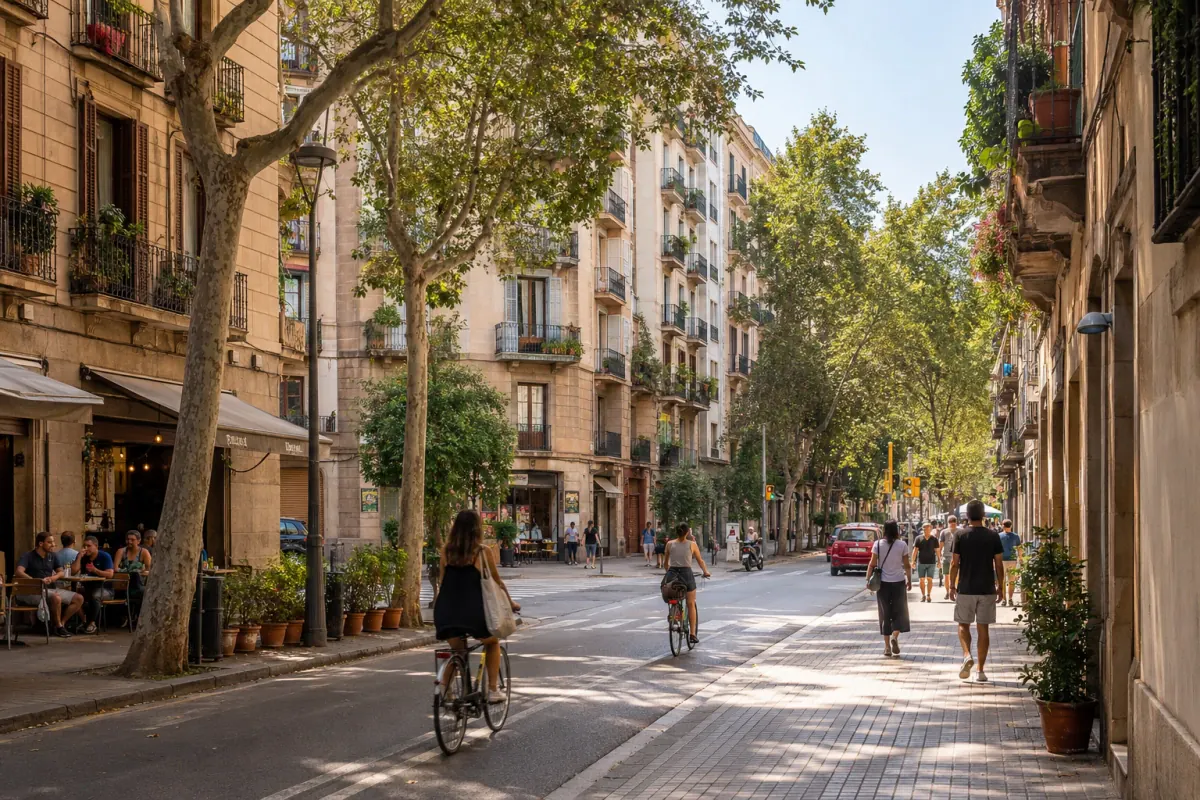
Barcelona is a strong option for remote workers who want a dense European city with Mediterranean outdoor life built into the daily map. Many errands are walkable, Metro and buses reduce car dependence, cycling works for short trips, and the beach sits inside the city rather than requiring a separate weekend destination. The trade-offs are housing pressure, tourism, noise, summer heat, and the demands of a major city.
Explore the wider destination guide to compare Barcelona with the other cities. For work-model and routine guidance, read the Remote Work guide.
For current residence and transport details, check official Spanish digital-nomad guidance and TMB fares. Our Spain digital nomad guide summarizes the official route and its limits.
Sponsored
Connect with other digital nomads for friendship, conversation, or companionship.
Barcelona’s dating opportunities are shaped by neighborhood and season. Eixample offers a central grid of cafés, restaurants, coworking spaces, and transit connections, while Gràcia has a smaller-square and local-routine feel that can make repeated meetings easier. Poblenou suits people whose work, beach access, and coworking life are based near the coast. Sant Antoni and Poble-sec provide additional food, culture, and evening options without requiring every meeting to happen in the busiest tourist areas. Choose the part of the city where you can keep a normal workweek, not only the place that looks best during a short visit.
Recurring settings create better context than one-off nightlife. Try a coworking community, language exchange, sports or fitness class, creative workshop, or professional event where people may recognize each other over time. Parc de la Ciutadella can work for a casual daytime walk, while neighborhood cafés in Gràcia or Sant Antoni make shorter meetings easier to repeat. If you want a relationship-minded dating service as a complementary channel, a relationship-focused dating service can be considered alongside those in-person routines.
Before making plans, confirm current opening hours, event schedules, transport conditions, and any venue rules directly. A place that works for a daytime introduction may not suit a late return or a busy workday. Keep first meetings public, tell a friend where you are going, and let consistency build naturally.
Barcelona also needs clear conversations about residency and movement. Someone living locally, someone spending a season in the city, and someone moving through Europe may have different expectations even when the first dates feel easy. Ask how long each person expects to stay, how work affects availability, and whether a connection should continue if one person leaves. The digital nomad dating guide offers practical questions for testing whether shared chemistry can become sustainable continuity.
| Factor | Assessment |
|---|---|
| Cost | Moderate to high in central and coastal neighborhoods; flexible housing carries a premium |
| Internet | Strong national and city connectivity context, but the exact apartment or workspace must be tested |
| Coworking | Mature and varied, especially across Eixample, central districts, and Poblenou’s innovation corridor |
| Community | Large, international, professional, creative, and distributed across neighborhoods |
| Getting around | Strong Metro and bus system, walkable grid, and practical cycling, with crowding and traffic trade-offs |
| Long-stay suitability | Good for workers who accept housing pressure, tourism, summer heat, and dense urban routines |
| Best for | Urban remote workers, cyclists, tech and creative professionals, and people who want city-plus-coast life |
| Main drawback | Housing cost and tourism pressure combined with noise, crowding, and seasonal demand |
These are qualitative judgments, not numerical scores, reflecting how Barcelona works for someone living and working remotely for several weeks or longer.
Barcelona’s appeal is more integrated than a standard European city break. A remote worker can live in a regular apartment block, walk to a market or café, cycle to a coworking desk, take Metro to a meeting, and reach an urban beach without leaving the city. That combination gives Barcelona a different long-stay identity from Lisbon, where terrain, hills, and Atlantic capital infrastructure shape the daily calculation more strongly.
The Eixample grid makes orientation and short trips relatively straightforward. Poblenou adds a technology and innovation corridor near the coast. Gràcia provides a more neighborhood-based rhythm, while Sant Antoni offers central everyday convenience without El Born’s historic-tourist intensity. Local routines are strong, but a cross-city commute can still consume the day.
The remote-work ecosystem is another draw. Coworking spaces, cafés, startup networks, creative communities, language groups, and professional events create multiple ways to build a routine across central and innovation-oriented neighborhoods.
The important qualification is cost. Barcelona’s Mediterranean lifestyle and international reputation have not made central housing automatically affordable. The most convenient areas are often the most competitive, while cheaper housing farther out may weaken the walkability, cycling, social access, or beach convenience that made the city attractive in the first place.
Barcelona does not have one dependable “digital nomad monthly average.” Rent varies by neighborhood, street, building condition, furnishing, lease length, season, and proximity to Metro, coworking, or the beach. A furnished one-month apartment is a different product from an ordinary long-term contract, and a room share is not comparable with a private studio.
The Generalitat publishes rental statistics by Barcelona district and neighborhood, including current contract data, while the Barcelona City Council data portal publishes average rental indicators. These official sources establish direction and relative variation, but they do not guarantee what an international tenant will pay for a furnished apartment next month. At a directional level, central Eixample, Sant Antoni, El Born, and popular Gràcia streets should be treated as pressured markets. Poblenou spans older residential buildings, converted industrial stock, and newer development near 22@ and the waterfront; building quality and proximity to work or beach access can command a premium. A room share may lower the monthly amount but changes privacy and work conditions.
Flexible furnished housing can cost more because it includes furniture, utilities, internet, and a shorter commitment. A standard lease may require documents, deposits, proof of income, local registration, or a longer term. Confirm what is included, how utilities are capped, who handles internet problems, and whether the apartment has practical cooling, ventilation, desk space, and sound insulation.
Daily spending can move across several levels. Supermarkets, markets, local cafés, and ordinary neighborhood routines are different from specialty coffee, international dining, gyms, paid coworking, frequent taxis, and imported products. Public transport can be manageable, but a low fare does not compensate for a long commute or a poor neighborhood fit.
Housing and tourism pressure should be described carefully. Barcelona’s city policy addresses tourist accommodation, illegal listings, resident coexistence, and the need to protect housing availability and neighborhood quality. Housing access is shaped by supply, demand, income, investment, regulation, redevelopment, temporary leases, tourism accommodation, and international mobility. Remote workers may contribute to demand in selected furnished or central segments, but the evidence does not justify saying that digital nomads alone caused Barcelona’s housing crisis.
The balanced conclusion is that Barcelona can work at several budget levels, but the most visible central and coastal areas are not a neutral sample of citywide costs. Budget for the complete routine: rent, utilities, internet, groceries, coworking, transport, cycling, deposits, and the premium for flexibility.
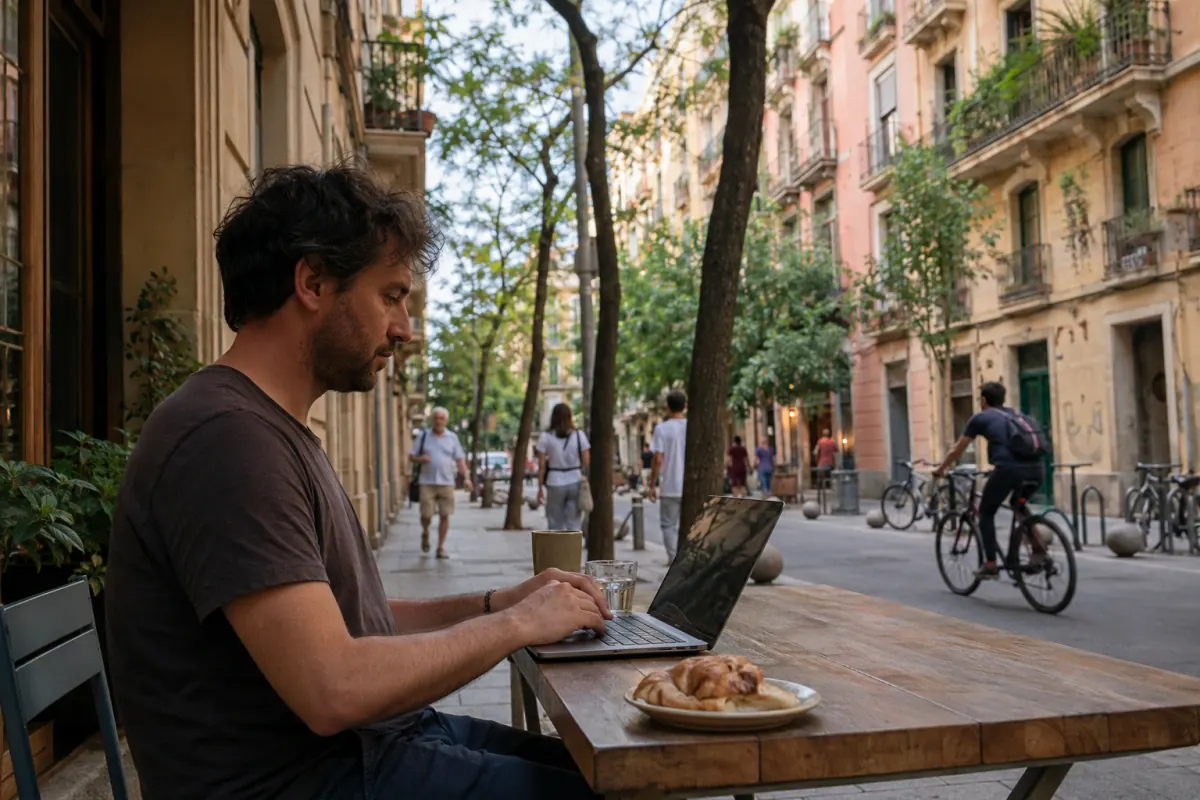
Barcelona’s neighborhood structure is one of its main advantages and one of its main complications. The areas are close on a map, but street life, building stock, noise, tourist demand, work access, and social routines can change within a few blocks.
Eixample is the practical central choice: a regular street grid, strong Metro and bus access, abundant services, cafés, offices, coworking, and errands that can often be combined on foot. It suits first-time residents and people who want a predictable base while learning how Barcelona works.
The trade-off is pressure. Rent, traffic noise, tourist circulation, construction, and a less village-like atmosphere can all be noticeable. Eixample works when central access is more valuable than neighborhood intimacy or quiet.
Gràcia has a more neighborhood-based feel, with smaller streets, local services, plazas, cafés, and a strong resident identity. It can suit a longer stay for someone who wants daily routines that feel less corporate and more local while remaining connected to central Barcelona.
The smaller street network is not always as direct as the Eixample grid. Apartment supply can be limited, busy plazas can be noisy, and some business or coworking corridors require a transfer or a longer walk. Gràcia is a good fit when atmosphere matters more than maximum transport simplicity.
Poblenou combines the 22@ innovation area, coworking, creative and technology businesses, cycling routes, newer development, and close beach access. It is the clearest fit for people who want work and outdoor life in the same neighborhood geography. A cyclist or tech worker may be able to keep most of the week within a compact corridor.
The trade-offs are development, construction, newer-building premiums, and distance from some central social routines. The waterfront is busy in warmer months, and “near the beach” does not guarantee quiet. Poblenou suits residents who value the city-plus-coast combination enough to accept a different urban texture.
Sant Antoni is central, service-rich, and connected to the wider Eixample. Its market-and-residential character can make ordinary errands practical without placing the resident directly in El Born’s historic-tourist intensity. It often suits independent workers who want central convenience with a more everyday rhythm.
Rents are rising, streets can be busy, and construction or food-and-nightlife activity affects some blocks. Sant Antoni is a useful compromise when transit and daily services matter more than a polished neighborhood identity.
El Born is dense, historic, highly central, and close to the waterfront and social activity. It can work for a short trial stay or a resident who prioritizes immediate access to central life over quiet and predictable routines.
The drawbacks are tourism, nightlife, narrow housing, noise, and a less stable long-stay atmosphere. El Born is central without necessarily being comfortable for focused remote work. Choose it only when its access and intensity match the actual workweek.
Choose Eixample for grid-based convenience, Gràcia for resident-oriented texture, Poblenou for cycling, coworking, technology, and beach access, Sant Antoni for central practical life, and El Born for maximum historic-core access. Before signing, inspect the exact block at working and sleeping hours and test the route to the workspace, grocery store, transport, and beach.
Spain has mature fixed and mobile connectivity, and Barcelona’s dense business and residential market offers many apartment and coworking options. Ookla’s Speedtest Global Index provides Spain-level and, where available, city-level context, but a country median is not a guarantee for one apartment. Ask for a current speed test from the actual unit, confirm whether fiber is active, test a video call at likely working hours, and keep mobile tethering available. Older buildings, shared routers, temporary apartments, and landlord-managed service can create more variation than a national ranking suggests.
Barcelona’s coworking ecosystem is strongest across central and innovation corridors. Current operator pages document workspaces in Eixample and Poblenou with hot desks, private offices, meeting rooms, focus zones, and community options. Cafés add flexibility but vary in power, turnover, noise, laptop policies, and calls. A paid desk adds cost but can solve meetings, internet, and community access. Choose housing and workspace together rather than relying on cafés.
TMB’s 2026 fare page lists a €2.90 one-zone single ticket and a €22.80 one-zone T-usual monthly pass after the published discount in force from 15 January 2026. Products, eligibility, zones, discounts, and airport conditions must be rechecked at publication. Metro and bus coverage make central Barcelona practical without a car. Integrated metropolitan fares extend the useful radius, while buses fill gaps between Metro lines. Crowding, service changes, night schedules, and cross-metropolitan travel still affect the workweek, but the network is a stronger multi-modal base than a city that depends mainly on taxis.
Walking is particularly practical in the Eixample grid and around Sant Antoni. Gràcia’s smaller streets can feel more local but less direct, while El Born’s historic lanes are central without being spacious. Traffic, heat, narrow sidewalks, and tourist density can make a nominally short route tiring.
Cycling is a major Barcelona differentiator. Cycle lanes and Bicing make short daily trips practical in suitable corridors, especially Eixample, Sant Antoni, and Poblenou. Bicing is a municipal everyday-mobility service rather than a promise that every visitor can pick up a bike without checking current membership and access rules. A bike can connect home, coworking, market, and beach more efficiently than a car during busy periods. It does not eliminate traffic, pedestrian conflicts, hills toward the edges, or the need for secure storage. Ride-hailing and taxis help with luggage, rain, late travel, or poorly connected routes, but they do not remove congestion. The city core is compact; the wider metropolitan area is not.
Barcelona has international, professional, creative, technology, academic, sports, and language-learning networks. Coworking communities, classes, conferences, cycling groups, neighborhood activities, and professional meetups create repeated entry points for newcomers. Nomads.com provides platform-level destination signals, but its estimates are based on its own user behavior and are not official population statistics. Community follows neighborhood geography. Eixample and Sant Antoni offer central event access. Poblenou attracts technology, creative, cycling, and beach-oriented routines. Gràcia supports a more resident-oriented rhythm. El Born is socially visible and easy to reach, but its visitor intensity can make the social scene feel more transient.
The community is broad rather than concentrated in one hub. A recurring coworking desk, class, language exchange, or cycling group is more likely to create durable contact than a long list of one-off events. Spanish or Catalan language effort helps with ordinary life and local integration even when international spaces operate partly in English.
For a broader framework on meeting people and building routines while working remotely, see our guide to connections for digital nomads.
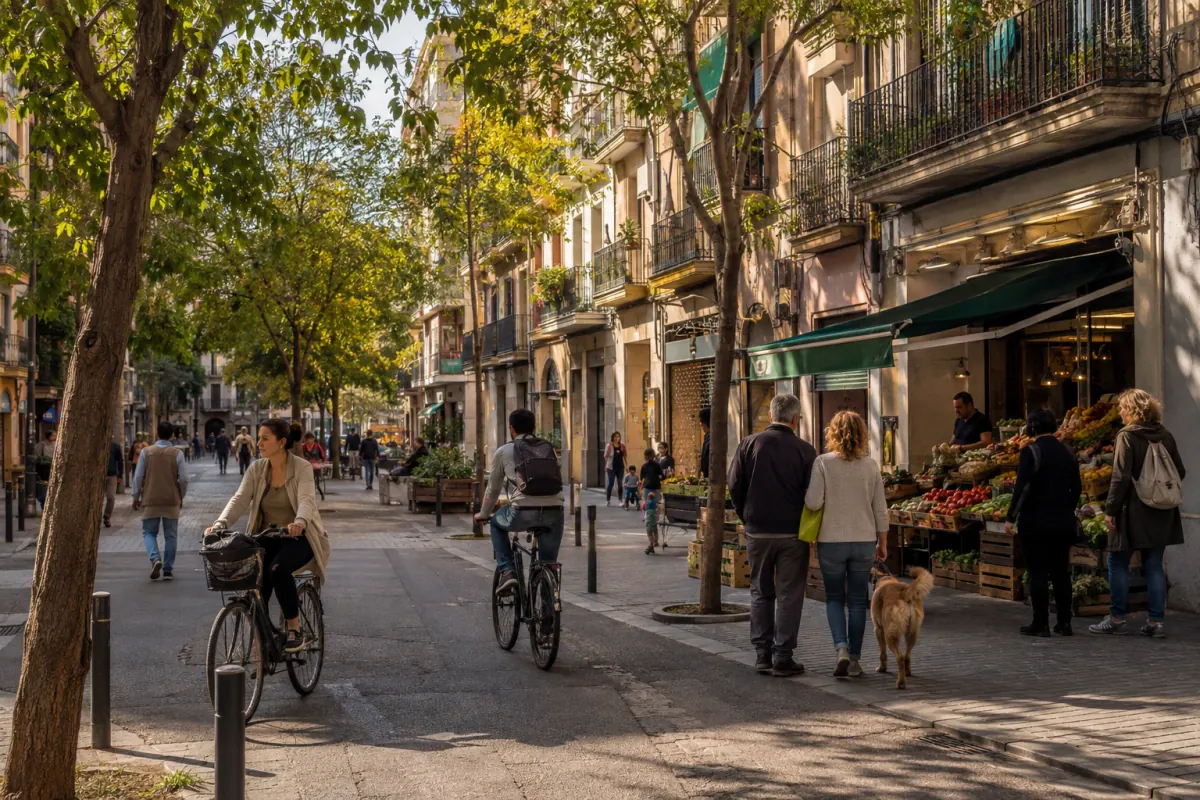
Barcelona can combine a serious workweek with Mediterranean outdoor life. A resident may work from home or coworking, buy groceries nearby, cycle to a meeting, walk through the grid, and reach the beach without leaving the city. That is a daily-life advantage, not a sightseeing list.
The beach is public, urban, and highly seasonal, with crowding, heat, and visitor demand. Poblenou integrates access most easily, while El Born adds stronger historic-core tourism pressure.
Apartment quality determines comfort. Check locks, intercom, internet, sound insulation, air conditioning or fans, heating, elevator, laundry, water pressure, damp, ventilation, desk space, and construction nearby. Summer heat and humidity can expose weak cooling or poor airflow. A mild winter does not guarantee comfortable indoor conditions in older buildings.
Barcelona should be described with normal urban awareness rather than a citywide safe/unsafe label. Tourist corridors and crowded transport require discreet handling of phones, wallets, and bags. Nightlife noise, scooters, traffic, and busy streets can be a housing problem even when the apartment looks attractive.
Inspect the exact block in daylight and after dark. Confirm building access, contract terms, utility caps, internet responsibility, and the route to daily services. Use established taxis or ride-hailing when appropriate, and keep a mobile backup for work.
AEMET climate normals for Barcelona Airport are the preferred official reference for temperature and rainfall patterns. Barcelona’s Mediterranean climate generally supports outdoor life across much of the year, with hot, often dry summer conditions, milder winters, and rain that can arrive in concentrated events. “Mediterranean” does not mean uniform indoor comfort. Summer heat, humidity, limited air conditioning, street noise, and weak ventilation can affect remote work. Spring and autumn often provide a balanced routine, while winter may be quieter but still requires inspection of light, heating, and damp.
Summer also brings stronger visitor demand and beach crowding. A long-stay resident should decide whether the city’s outdoor appeal is worth the seasonal pressure rather than assuming the tourist season affects only attractions. Air quality and traffic vary by day, so avoid turning a climate reputation into an absolute daily guarantee.
Spain has an official residence route for eligible international remote workers. Government information describes a residence authorization under Law 14/2013 for remote work performed through telematic means, with a three-year authorization in the relevant in-country procedure and a one-year visa pathway for applicants outside Spain, subject to eligibility and documentation. The framework distinguishes employed remote work for companies outside Spain from professional activity where work for Spanish companies is limited to a stated percentage. Applicants may need evidence of the relationship, company activity, qualifications or experience, finances, insurance, and other documents. Requirements and tax treatment can change, so use Spanish government or consular sources at publication time.
This context supports Barcelona’s European long-stay appeal, but a residence route does not solve housing access, contract terms, tax planning, or neighborhood fit. The destination page should keep legal information secondary to everyday living and remote-work practicality.
A two- to four-week trial can test the apartment, internet, cycling, transport, heat, noise, tourism intensity, and whether beach access genuinely improves the workweek. One month can establish routines, but furnished housing and seasonal demand may make short stays expensive.
Three to six months can make Barcelona’s coworking and professional ecosystem more valuable if suitable housing is secured. Longer stays work best when the neighborhood is selected around recurring work, groceries, transport, cycling, and social activity rather than the most tourist-visible address.
Barcelona can be compared with the existing destinations by routine: Chiang Mai offers a smaller remote-work environment with a serious burning-season trade-off; Bangkok offers dense capital infrastructure and rail-based urban life; Canggu offers a beach-oriented, scooter-dependent routine; Lisbon offers a smaller European capital experience shaped by hills and Atlantic infrastructure; and Mexico City offers a much larger high-altitude city with strong North American time-zone compatibility. These are living-pattern comparisons, not rankings.
Barcelona may suit you if:
Barcelona may be less suitable if:
Start with one or two repeated routines close to home: a coworking space, class, cycling group, language exchange, gym, or neighborhood café. A nearby routine is more sustainable than crossing the city for every event. Poblenou can support a work-and-outdoor circle; Gràcia can support a more local rhythm; Eixample and Sant Antoni provide central access; El Born offers visibility but more tourism intensity.
Use the city’s international character as an entry point without confusing it with local integration. Return to the same places, learn enough Spanish or Catalan for ordinary interactions, and respect that the neighborhoods are residential communities rather than interchangeable lifestyle products.
Explore slow travel and remote-work routines alongside this Barcelona-specific destination evaluation.
Barcelona is a credible long-stay base for remote workers who want dense European city life, strong public transport, practical cycling, a mature coworking ecosystem, and beach access inside the metropolitan routine. Its neighborhood structure creates real choices: Eixample prioritizes grid-based central convenience, Gràcia a more resident-oriented texture, Poblenou a technology-and-coast combination, Sant Antoni practical central living, and El Born maximum historic-core intensity.
The compromises are equally important: housing pressure, furnished-rental premiums, visible tourism, summer heat, and a wider metropolitan area that is more demanding than the central map suggests.
If you value a walkable, cycle-friendly Mediterranean city with strong remote-work networks and can choose housing realistically, digital nomad Barcelona is worth serious consideration. If you need low rent, quiet streets, minimal tourism, or a small beach-town rhythm, another base may fit better.
Choosing a city is only the first step. A longer stay also depends on friends and community, coworking and professional connections, roommates or coliving compatibility, local activities, and dating and relationships.
Barcelona’s walkable neighborhoods and international routines can make meeting people easier, but a lasting relationship still depends on compatibility beyond the first season in the city. For a practical guide to building serious relationships as a digital nomad, continue to the dating guide.
Continue planning
See how Barcelona compares with cities that offer different work environments, climates, social routines, and long-stay trade-offs.
Lisbon vs Barcelona Mexico City vs Barcelona Bangkok vs Barcelona
Core sources are listed with their verification dates. Time-sensitive information should be rechecked before acting on it.
Common questions
Barcelona offers dense urban life, public transport, walkable neighborhoods, international communities, and Mediterranean amenities. Housing pressure, tourism, noise, and the need to choose a practical neighborhood are key trade-offs.
Coworking spaces, language exchanges, professional communities, fitness classes, creative workshops, neighborhood cafés, and recurring local activities can make it easier to see people more than once.
Many residents can manage daily life using walking, public transport, and cycling, depending on their neighborhood and routine. Commute time and seasonal crowding still matter when choosing accommodation.
Check current housing conditions, local rules, noise, transport access, work setup, and seasonal crowding. A visually attractive central location may not be the most sustainable choice for ordinary workdays.